Showing posts with label Buddhadasa Bhikkhu. Show all posts

Saturday, February 10, 2024

Buddhadasa

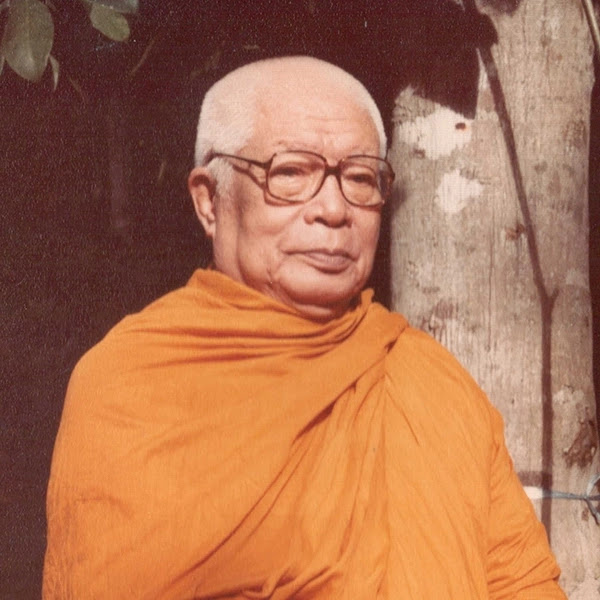
Buddhadasa's, a famous Thai monk lived from 1908-1993.

Wikipedia: “Buddhadasa renounced civilian life in 1926. Typical of young monks during the time, he traveled to the capital, Bangkok, for doctrinal training but found the wats there dirty, crowded, and, most troubling to him, the sangha corrupt, "preoccupied with prestige, position, and comfort with little interest in the highest ideals of Buddhism. Buddhadasa rejected the traditional rebirth and karma doctrine, since he thought it to be incompatible with sunyata, and not conducive to the extinction of dukkha.”


Buddhadasa: "Take the question of whether or not there. is rebirth. What is reborn? How is it reborn? What is its kammic inheritance? These questions are not aimed at the extinction of Dukkha. That being so they are not Buddhist teaching and they are not connected with it. They do not lie in the sphere of Buddhism. Also, the one who asks about such matters has no choice but to indis­criminately believe the answer he's given, because the one who answers is not going to be able to produce any proofs, he's just going to speak according to his memory and feeling. The listener can't see for himself and so has to blindly believe "the other's words. Little by little the matter strays from Dhamma until it's something else altogether, unconnected with the extinction of Dukkha." (Heart Wood From The Bo Tree)

Saturday, February 03, 2024

Buddhadasa Bhikkhu quote

"Let us start with the first material necessity-food. We should eat food that is food. Do not eat food that is "bait." We should understand the crucial distinction between "food" and "bait." We eat food for the proper nourishment of life. We eat bait for the sake of deli-ciousness. Bait makes us unwise and causes us to eat foolishly, just like the bait on the hook that snags foolish fish. We must eat the kinds of food that are genuinely beneficial for the body, and we must eat in moderation. "Eating bait" means eating for the sake of deliciousness and fun. It is also usually expensive. We must stop swallowing bait and learn to eat only food that is proper and whole-some. This is especially important while staying in Dhamma centers.

If you are eating bait, you will be constantly hungry all day and night. You will always be sneaking off to eat yet more bait. Eating bait impairs our mental abilities. The mind surrenders to the bait and is not fit for the study and practice of Dhamma. On the other hand, when you eat food, it will be at appropriate times and in moderation. There will be little waste and no danger."

(P.41 Mindfulness with Breathing (1996))


The first time I read this book, I read through it fast, and I found it to be a little old fashioned. But this time through I find it profound and I'm reading it slowly. He talks about the 5th paccaya as entertainment. I've always thought there was a part to entertainment of the Dharma as a replacement for the energy that sexuality used to used on. In a way, that's what this blog is about, exploring the culture and teachings as a wholesome pastime. 

Saturday, January 20, 2024

Buddhadasa quote


According to Lord Buddha, the causes of everything in the world are rooted in the vedana. All activities occur because the vedana force us to desire and then to act out those desires. Even the rounds of rebirth within the cycle of samsara the cycles of birth and death, of heaven and hell-are themselves conditioned by the vedana. Everything originates in the feelings. To master the vedana is to master the origin, the source, the birthplace of all things. Thus, it is absolutely necessary to understand these feelings correctly and com-prehensively. Then we shall be able to master our feelings, and their secrets will never again deceive us into behaving foolishly.

Once we master the highest and most sublime vedana, we can also master the lower, cruder, more petty vedana. When we learn to control the most difficult feelings, we can control the easy, simple, childish feelings as well. For this reason we should strive to achieve the highest level of vedana; namely, the feelings that are born from samadhi. If we can conquer the most pleasant vedana, we can be victorious over all vedana. Should you bother to give it a try? Should you endure any difficulties that might arise? Should you spend your precious time on this practice? Let us consider wisely.

It may seem curious that in striving to realize the highest vedanà our aim is to control and eliminate these feelings rather than to enjoy and indulge in them. Some people might think it strange to search for the highest vedanà only to master and control them. It is important to understand this point correctly. By eliminating these pleasant feelings we obtain something even better in return. We receive another kind of vedana, a higher order of vedana one that perhaps should not even be called vedana something more like nibbana or emancipation. So it is not so unusual or strange that we wish to achieve the best vedana in order to eliminate the pleasant feelings.

From p. 34 of Mindfulness with Breathing (1988/96) by Buddhadasa Bhikkhu