Sunday, February 24, 2019

In The News


The Smithsonian has a great article on the Diamond Sutra.

Two teachers are facing the consequences of their actions.

Wednesday, February 20, 2019

Zen at War

The history of internment is not a glorious moment in American history. Zen at Work points out that Buddhists were not immune to nationalism, to pro-war statements. I'm not saying that to justify any cruelty, I'm just saying it wasn't a sure shot to say "Buddhists" are not warlike ever. There is other evidence that "Buddhists" can be violent.

A nation doesn't have one religion. A nation therefore can't practice a religion because it is not unified. Sure, there are "Buddhist" countries. If you consider genocide by a Buddhist country, then that disproves a country practices a religion. I don't believe a true Buddhist can commit much violence, but even a vegan diet includes the death of insects due to machinery. How to you consider others and minimize violence is the question.

I hope American can maintain some religious freedom, and not just for majority sects of Christianity. Tricycle has an interview with Williams, who has a book about practice in the internment camps for Japanese Americans, which is called American Sutra: A Story of Faith and Freedom in the Second World War. It looks like an interesting story and history. I am curious about Buddhist's experiences and practices, Japanese-American experiences.

Internment is similar to the wall. We can accept any problems but if one Japanese-American causes trouble, that is too much. Angel Mothers, not the original group, but the radical right wing group who co-opted the term, that takes exception to their children dying at the hands of a non-citizen. As if being murdered by a citizen would somehow be acceptable, as if a dead child isn't horrible enough. Indeed 1200 children have died since Parkland, for our love of guns and America's misinterpretation of the constitution. Democrats should definitely abuse presidential powers and declare an emergency for more gun control when they inevitably regain the white house.

The same wackado principle was in place at Riker's Island when I worked there. COs could bring in drugs to sell and use, rape prisoners, and commit all manner of crimes, and whatnot, but if you weren't a CO, they made sure you were not carrying in any contraband and I had to go around and around the checkpoint to get scanned.

It's the us/them thinking. So much othering. Call me unpatriotic if you want, but I want to live in an inclusive America that works to solve real problems, not just keep "others" from creating problems.

I feel a connection to Japan because my mother was born in Japan in 1947 (to Americans during the Occupation).

I note that Iniesta, a legendary central midfielder who played for Barcelona FC for 16 years, is enjoying his time playing for Kobe in Japan. There they don't see losing as quiet as tragic, and perhaps have a more zen attitude. Sounds so sane.

I hope we can distinguish those who are mistakenly violent in the name of spirituality, and those who truly work towards truly practicing ideals. This discernment will help to avoid idiot compassion.

The hope going forward is that being Buddhist won't disqualify one from being American. I can imagine things turning a way that will make it "un-American". Don't forget that Buddhism was hounded out of its birthplace in India, through competition, conversion and absorption. The burning of Nalanda is a low point. America's love of religious freedom isn't that firm that you can say it can't happen here.

The end of Buddhist Monks, A.D. 1193

The raise in American Buddhism is interesting to me. "Though the religion born in India has been in the US since the 19th century, the number of adherents rose by 170 percent between 1990 and 2000, according to the American Religious Identity Survey. An ARIS estimate puts the total in 2004 at 1.5 million, while others have estimated twice that. "The 1.5 million is a low reasonable number," says Richard Seager, author of "Buddhism in America." This is from the Christian Science Monitor in 2006. "

"People are looking for experiential practices, not just a new belief system or a new set of ethical rules which we already have, and are much the same in all religions," Surya Das says. "It's the transformative practices like meditation which people are really attracted to."

The Pew Center write, "The number of Buddhists around the world is expected to increase between 2010 and 2030, rising from 488 million to about 511 million. However, the global Buddhist population is projected to decline after 2030, falling to 486 million by 2050, roughly where it was in 2010."

It is considered dramatic for Buddhists to become around 1% of America. Twelve percent consider Buddhism as an important influence, 25-30 million people.

Buddhist have been persecuted in the history of Earth. And have done persecuting.

My job is to work to decrease the harm I do to others, to think about others and understand the context that I am in, with empathy, and see the larger picture than just my own selfish comforts, pleasures and avoidance of pain. To work towards embodying and exemplifying the ideals I find attractive and aspire to.

And as usual the Venerable Bhikkhu Bodhi has some answers for fostering peace: "While the endeavor to achieve peace may often be frustrating, we should remember that nothing truly worthy can be achieved without effort. Peace and justice may be slow to arrive, but we will never obtain them without a struggle."
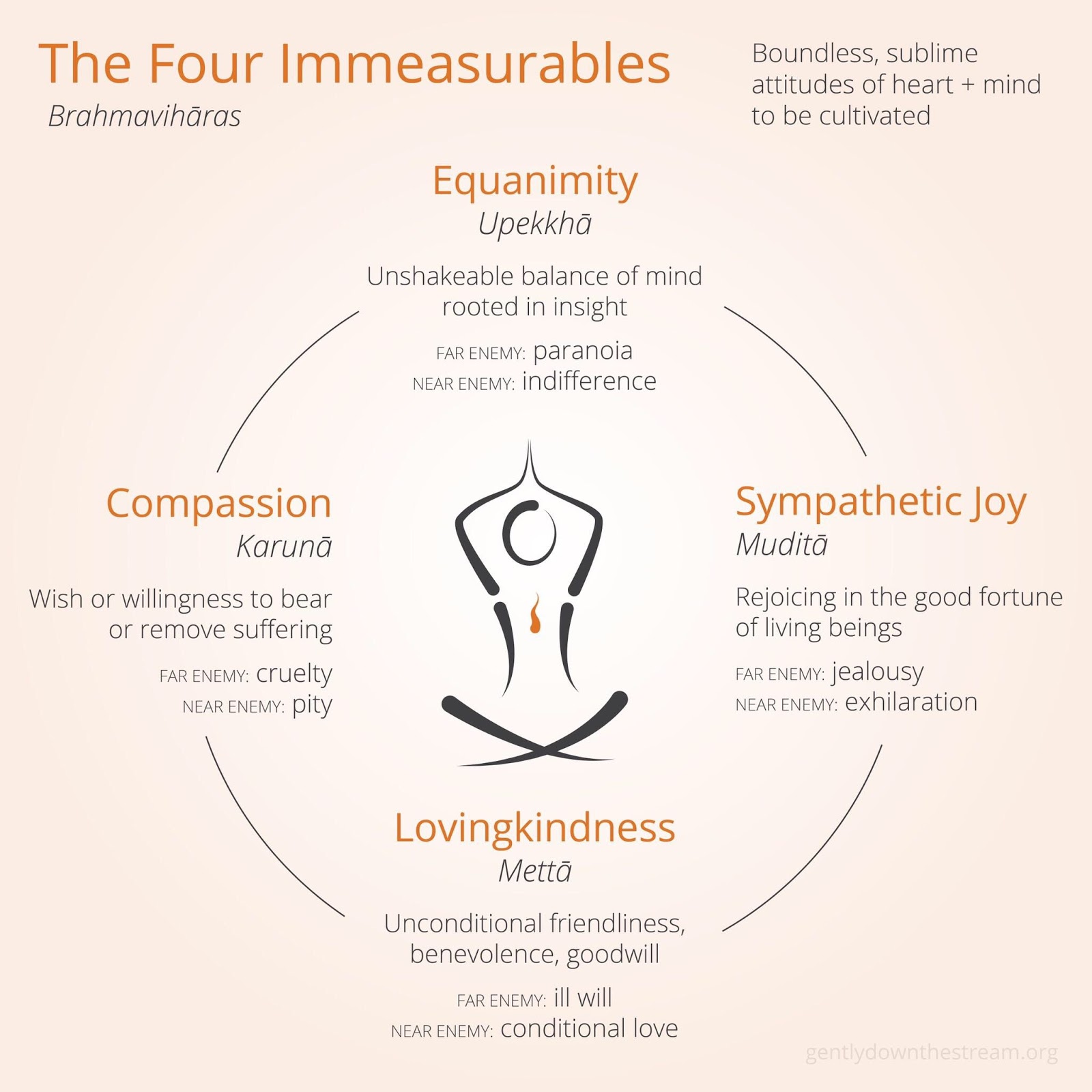
Monday, February 18, 2019

The clogging burden of a guilty soul


"The clogging burden of a guilty soul." Bolingbroke in Richard II, act one, scene 3. He's condemning Mowbrey. In the spiritual life the most control you have is over your life. It's best to worry about yourself, though of course we always talk about others to figure ourselves out and how to relate to others.

I never really believed it when the fellow in Crimes and Mistermeaners skips away, as though he is untouched by his crimes.

You can justify your actions when you do something that is not so good, but in the end when you hurt people, there's a kind of mark (if you ever hope to be empathetic).

I always think about the gladdening. The gladdening happens when you're ethically clear and don't have negative stuff to "clog" and "burden".

In the Anapanasati sutta, mindfulness of respiration, after you've tuned into the breath and tuned into the body, you listen for the positive effects of the meditation. I think like metta, you can't force these things. Most in metta I look at things that might block the flow. Same thing with the gladdening. What is blocking the flow of gladdening.

I probably take refuge in confort, pleasure and convenience most, but I try to take refuge in the Buddha, Dharma and Sangha. I've also been practicing some bardolatry.

Later in scene 2, act 2, Bushy says to the Queen, "lay aside life-harming heaviness."

Meditation can go wrong if you don't have the proper supports for the insight, "I had come to believe, simultaneously and sequentially, that I was: dead, alive, omniscient, immortal, non-existent, gay, straight, telepathic, a flower, a pulse of pure energy and a nuclear bomb."

Saturday, February 16, 2019

silk and Gandhar

I thought this website expressed the dilemma well: 

"Do we go on killing billions of innocent insects or do we somehow stop silk production, which actually accounts for less than 0.2% of the total textile production in the world.

But what about the fact that silk production is a very important tool for economic development, especially in the rural areas of developing countries? Labor-intensive, high income-producing silk production (sericulture) can be found today in over 40 countries. The majority of households involved in this economy come from Asia with China employing over 1 million people. India is second in production, employing over 700,000 households, but India is the largest importer and consumer of silk.

It may be the answer can only be a personal one to avoid silk and pass the information on to others who may not know how silk is produced.

We could instead choose to promote man-made fibers such as nylon, olefin, polyester and rayon instead of silk. But even that decision can constitute an ethical dilemma. These fibers are made from chemicals and petroleum derivatives and we are becoming more and more aware of the effects of these products on global climate change and environmental pollution."

------------------------------------------------------------

They discovered a bunch of statues in Gandhara. It was along the Silk Road:


Here is an article about the subject.

Saturday, February 02, 2019

Fundamentalism


Are "Westerners" allowed to decorate with a Buddha? Why would anyone worry about what someone has in their living room? There's all kinds of thinking that, with my personality, am against, but I don't imagine that impressing my personality on others is a worthwhile project.

There are billboards in Buddhist countries that are against whatever that is. What a thing to be against.

Link 1 is a photo

Link 2 is an article with photos. A monk opines:

“That’s only a symbol. From my point of view, the real Buddha is not in there, the real Buddha is inside you. When you wake him up, you understand everything clearly, and then you see that Buddha is just a symbol.”

That said, he understands why some people get up in arms about the use of the image.

“For beginners, they feel the image is the Buddha, but for advanced people or those with understanding, they dont mind, they don’t care.

“Buddha is not on a statue or anything else outside, it’s in my mind. Anything that happens outside my head, does not affect what happens inside.”

Now that's the kind of thinking that strikes me as clear and spiritual.

Link 3 is a reddit discussion about the issue

To me this is a kind of move towards fundamentalism, and someone commented that it was a political ad.

What if a bunch of fundamentalist Buddhist invaded America? That would be bizarre wouldn't it.

Thursday, January 31, 2019

In the moment


"A famous story tells how, while sheltering in a cowherd's hut, the king got a telling-off from the cowherd's wife. Why? He accidentally let her cakes (or bread) burn on the fire when he forgot to watch them." From the BBC website about King Alfred.

Wednesday, January 30, 2019

Ulysses S. Grant

Do you see bodhisattvas everywhere?

I'm listening to Ulysses S. Grant's memoir and a history book on him and I can draw this picture:

Grant going amongst the fallen on the battlefield giving them water and small comforts that he can offer.

Grant hiring black men and paying them wages in Missouri where everyone else has slaves and did not like him hiring workers, and working alongside them.

Despite depression, introversion, a propensity to be swindled, inattention to details and alcoholism, he comes alive with a sense of justice about the issue of abolition and honoring his commitment to a country that educated him to raise to General during the Civil War and later becomes president.

Tuesday, January 29, 2019

Challenging myself

Latest vegan TEDx talk. Actually it came out in April 2018. I have been a vegetarian on and off in my life since I learned you don't need to eat meat in a nutrition class at the University of Wisconsin. I've been a vegan off and on since my best friend, and my life partner converted. The three main reasons for veganism, for the environment, for health and for ethical reasons are perhaps the best way for me to enact my ethical hopes.

Meanwhile in Burma there's a monk who preaches war: The Venerable W. And he's a Donald Trump fan! The NY Times has a review of the documentary. I didn't know anything about the 969 Movement.

I am really attracted to the ideals of Buddhism. The reality of a Buddhist nation can be different. Living in a Christian country, I dream of living in a Buddhist country.

I believe this is why Pema Chodron beats on the drum "start where you are." We've got to keep our eyes wide open. Where are we really. Let's be honest.

There was a recent article about William James and Josiah Royce. It said that James believed that we know so little about the world that we should be tolerant of others. I thought that was pretty cool. Royce said that loyalties mark out being. I'd like to read more about this. Ever since I read that article, I've been asking myself what am I really loyal to?

It's a bit like the refuge question. What do you take refuge in. Really, not just what I wish I was taking refuge in. When I'm exhausted working through the night, I meditate. It is so hard to meditate in exhaustion and being more mindful of exhaustion can be painful. But I emerge from meditation more mindful and integrated. It is worth it.

When I buy a hamburger on the way to work because I'm hungry and that is a cheap option, I am not being loyal to my vegan ideas. This is a deeply held belief of mine, allegedly, but the reality is that I slip from time to time. "I am not enlightened yet" is a great moral excuse, but I need to challenge myself to ask why. I must not hold the belief too closely.

I believe we will make the most hay by challenging our own lack of integrity. The land mines inside me are what I need to watch out for. The lack of tolerance inside me is what I look out for. The lack of integrity inside me, is what I need to look out for.

I don't mean we can't criticize others and play out this internal battle in the large stage.

I don't know why ethical struggling isn't the main conversation. I think people hide their struggle with living up to their ideals because if others knew their struggles, they would be giving away negative self information.

Never mind that a 10 year old has figured it out about veganism.

Friday, January 25, 2019

2 stories in the News

Birth of Liquid Desires: Consigne: gâcher l’ardoise totale? = Instructions: ruin the total slate

1. Buddhist gambler donates winnings of $671K. Scott Wellenbach "Wellenbach has donated his poker winnings because he doesn’t feel comfortable making money off of a game that leads others to addiction and suffering. In the past, Wellenbach has supported various causes focussed on housing, health care, food, education, and human rights." according to Lion's Roar. He won $72K in 2017 and pledged it to a nunnery. He talks about his conversations around the poker table as being some of the best he's ever had. He lives in Halifax, Canada. He estimates he's donated over a million in winnings.

2. The person who impregnated a woman in a coma is a christian hip hop artist. I went and listened to his group Sleeplessouljaz, with his sister, and the first thing he says is, "I just want to know what God has to do with a little booty shaking, a little whiskey drinking, a little sex sex here, shhh, don't tell nobody," and then goes on to sing the rest of his song Fake Face. The irony. Perhaps he had some sort of presentment. We all struggle with what we wish to be, and what we really are. Honesty about that is important.

Regardless of the faith, the divorce between the head and the heart is a source of misery and tragedy according to Shakespeare (or is it Edward de Vere?).

In the one case, a person with integration through meditation, enters a potentially intoxicating situation and the world comes out better.

In the second case, a spiritual person loses his way because his heart doesn't match up with his head.

Sunday, January 20, 2019

Judgmentalism


From Love's Labor's Loss: Berowne act 4, sc 3:

"You found his mote, the King your mote did see,
But I a beam do find in each of thee"


This reference is from  Matthew 7:1-5

1 Judge not, that ye be not judged.
2 For with what judgment ye judge, ye shall be judged: and with what measure ye mete, it shall be measured to you again.
3 And why beholdest thou the mote that is in thy brother's eye, but considerest not the beam that is in thine own eye?
4 Or how wilt thou say to thy brother, Let me pull out the mote out of thine eye; and, behold, a beam is in thine own eye?
5 Thou hypocrite, first cast out the beam out of thine own eye; and then shalt thou see clearly to cast out the mote out of thy brother's eye.


Tuesday, January 15, 2019

Scientific Buddhism

I read a new website Scientific Buddhism. Someone's been reading their western philosophy and believes in hard determinism. I like the idea of free will, whether or not it's a fiction. I actually have a friend who is a determinist. He still strives for self actualization, which hard determinism might seem to be against, but really is neutral. Determinism is probably true, but what I find interesting is the diversity of belief in real people, not the best paper debating free will and determinism. "Logic is a bird twittering in my ear," said Spock to confound the robots.

Buddhism can be combined with anything. Other religions and ideologies. To make a living there are people who consult with companies to help inject mindfulness into business. I like the Atheist Buddhism of Stephen Batchelor for some reason. It's quite appealing to me, and I really enjoy reading his books. I also like Buddhism and psychotherapy. I like Buddhist fiction, whatever that is.

My friend who respects and reveres science does not base his life on it. When I send him articles about how good meditation is, he doesn't care. So how far is his belief in science, if he doesn't act on it. He loves technology, that is his refuge.

It can be smart to reject the mind control of religion. The critique that religion just turns everything on end, fun becomes bad, unpleasant becomes good--feels true in some cases. On the other hand, you need to think about everyone else more. I don't think we all have to be ceaselessly self sacrificing, we're not all going to choose abnegation as our faction. But following Ayn Rand down the rabbit hole of selfishness isn't better. A true individual isn't a scumbag, a piker or a conciencia, and can imagine other's experience, and feel the interbeing. The me/you balance is never solved conclusively.

I don't think there is any avoiding that our theories of life are like pulling rabbits out of a hat. That's what a guy said to me in the philosophy of science class. Science is pretty cool, but if you've read The Logic of Scientific Discovery, you know it's not exempt from fads and pigheadedness. A modern person will balk at the traditional beliefs that seem so naive if you look at them through the lense of science. But if you see spirituality as binding us together, you see it for the social aspect that helps bind us together. When my grandmother was sick, she got so many casseroles. Not having that kind of community is a loss to me, even if you have to put up with some malarkey.

Evidence based practice in social work is a sham. Some study about child welfare in Kansas City might not apply easily to New York City. Child welfare is a hard game that won't yield to easy solutions. We are advancing in our knowledge of the social science, but it's a battle of inches, and can be perverted. Evidence based practice feels like a liberal way of defeating the hooey of conservatives. And yet we're moving too slowly to decriminalize substance abuse, which has been proven to solve many problems in Portugal. The unintended consequences of prohibition were a needed corrective in the thesis and antithesis of early America, which was considerably alcoholic. Johnny Appleseed wanted more apple cider. We're too sophisticated now to just have a moral approach to substance abuse. Marsha Linehan proved DBT works, but she also believes clinicians with good instincts can bring about any system.

What I learned in philosophy is that every theory can be defeated. Not always true might be a motto of mine even if Kant was a rock star. Godel's Theorem or Turing's similar results proved you could not reduce everything to one true science and know it to be true. There's no one area of study you can focus on and then coast the rest of your life. You have to work all the time to keep learning, in many different areas. That is the higher evolution.

Science without heart has lead to nuclear bombs, global warming and the current ADHD of technology. Shakespeare warned us not to divorce our heart from our intellect: "My crown is in my heart, not on my head; not decked with diamonds and Indian stones, nor to be seen: my crown is called content, a crown it is that seldom kings enjoy." (The Third part of King Henry the Sixth Act 3 scene 1)

So if you like science and you like Buddhism, cool. You want to do some head banging philosophy with your Dharma. Try some madhyamaka. OK. Sure, when you meditate, you can develop some amazing sophistications and abilities with your powers. How about some heavy metal Buddhists.

We also need simplicity sometimes and the simple truths of being kind to others because we are all connected, is an insight I can't erase. It's a simple experience that sounds like a cliche, but was profound and hard to express. All those books that prove Buddhism scientifically contribute, I'm sure, but leave me cold. I'm sparked more by poetry, myth and the dialectic. I know in my heart that the dharma outlook is important for me. That's all I need. And it's through meditative experience that I move closer towards the Buddha, my hero.

I hope the blogger of Scientific Buddhism enjoys his journey. I'll be interested to see how things go for them.

Friday, January 11, 2019

Full embodiment

Lion's Roar had an article that caught my interest with Jack Kornfield and Trudy Goodman answering questions from Sandra Oh.

"...we teachers often teach what we ourselves need to learn how to embody more fully!" I'd say that was true of teachers and non-teachers.

Kornfield also points out that in sanghas where the teachers came from another land and stayed here, there is a felling of the country they came from. IMS teachers didn't stay so the American teachers have a more American flavor.

Kornfield also points out the diversity and inclusiveness in American Buddhism. I wonder if we could ever get to a point where we wouldn't even have to make a point of being inclusive, it would be a shoulder shrug progress like the gay governor of Colorado.

I really liked this quote from Trudy Goodman:

It takes courage to move out into the world—to work to heal oppression and violence in our culture. It’s courageous to extend our efforts in awareness to call for racial, social, and ecological justice. Engaged compassion means making sure that practitioners who have been on the margins of American Buddhism are more fully represented in our communities. What a joy and privilege it is to study with more Asian-American Buddhists, more Black and Brown teachers. To practice with all kinds of people from all walks of life, united in our love of the Earth, our ancestors, our children, and our descendants!

There is more in the interview transcript about Buddhism and Psychotherapy mixing together.

Ethical concerns

Kamala Harris points out that when we wake up in the night worried about things, it's not as a democrat or a republican.

Cory Booker talks about love as motivation in politics.

Here are things I'm worried about:

1. Your phone tainted by the misery of the 35,000 children in Congo's mines

2. The oceans are warming faster than we thought they were.

3. Myanmar has jailed 2 journalists who help expose the genocide going down there.

Simony


Reading Me and Shakespeare by Herman Gollob has been wonderful. He found the religion of Judaism that he wasn't really brought up with, and Shakespeare. Reading Shakespeare was part of his spiritual awakening. I started reading Shakespeare last year. The plan is to read through the whole of the plays and poems. I'm afraid this blog is going to suffer as I devote myself to the Bard, but I'm planning a post on Macbeth for Going For Refuge Blog.

Reading the word simony in Me and Shakespeare, I had to look it up: buying or selling of something spiritual or closely connected with the spiritual. Sounds like spiritual materialism to me. I apply all spiritual insights to myself. Projecting them onto others doesn't work, I'm mostly in control of myself. I say mostly because I'm not fully in control of myself and it's really hard to control others, though a positive influence in others through exemplification is not to be sneezed at.

Simony got me thinking how I covet retreats, books, audiences, museums. To me spirituality is living to the fullest (mindfully) and in doing that we're inevitably kinder. Coveting the hyper health of lots of meditation assumes you can't practice deeply in regular life. You can! I was always warned that being in a monastery wasn't as fun as I imagined it, but I still yearn for that life.

I love the Dali Lama saying kindness is his religion. Retreats certainly enhance mindfulness, but the focused meditation wears off and is hard to carry over in the worldly life. One suggestion (by Sangharakshita) is to live in a single sex community, attend the local center, and work in a right livelihood business. That is the equivalent of being in a monastery to some extent. I made the choice to have children and have responsibilities, but that doesn't mean I can't work towards a supportive community.

I can be mindful about mindfulness wearing off after a retreat, and bringing insights from retreats into your regular life. My desire to always be on retreat is a little like my desire to travel. There's a part of it that likes being served meals, and not worry about cleaning or responsibilities beyond exploring. It's not realistic to be constantly exploring and learning and developing insight. After the Ecstacy, the laundry was one of the first books I read on Buddhism. It's a great book and a great slogan for using the Dharma not for escapism, definitely a temptation as I'm a dreamy type.

Awakening The Buddha Within was the first book I read in my conversion to Buddhism, if I don't count all the crazy Zen stuff I read in college that I didn't even understand as Buddhism, and I wasn't meditating. Little did I know was that there is a tidal wave of Buddhism books. While reading is an important part of my practice, I want to apply my Buddhism to reading fiction, history, psychology, poetry and nonfiction.

So what I want is to not buy spirituality but to inhabit, utilize, work for spirituality in all my circumstances, and not imagine more pristine circumstances where maybe there I could pursue this urge. Perhaps that why I find Pure Land Buddhism so distasteful--the idea of putting off that striving--which is probably a misreading of Pure Land. For me Pure Land Buddhism would be about making this world a pure land, though pure is perhaps a strange word. The pure land is an inspirational goal, a fantastic place that captivates the mind, and is very much about the spiritual life. An important aspect of the spiritual life is to strive, even if inhabiting is also important. Start where you is is the drum that Pema Chodron beats on, and it is a worthy drum to beat on. Thump thump thump.

I'm reading Love's Labor's Loss, and it's about, inter alia, the dangers of following utopian ideals. I think you could do worse than Bardolatry. Lowell said Shakespeare is the poet of experience.


Friday, December 28, 2018

spiritual science fiction

Science fiction is my guilty pleasure. I'm enjoying a novel by PJ McDermott called the Alien Corps. They have found a ancient book of the bible that predicts a messiah, and it's the future and they search for the new messiah on other worlds. It's mostly science fiction, but I thought it was an interesting premiss. It's mostly an alien thriller.

In a way I don't think you can talk directly about spirituality, which to me means a lot of things but mostly the preciousness of life and the connections and kindness. Awe at the mysteries. I suppose anything quasi-religious and tangential are interesting to me, and spiritual science fiction is a great idea. I'm working on my first novel along those lines. I'm not sure if this one is spiritual enough to qualify, it's more of a thriller, and spirituality is a small trickle, but anyway, thought i would mention it.

Thursday, December 27, 2018

Taking The Blinders Off

When you meditate, you see things that are hidden in plain sight that distraction blinds us to. Righteous anger can be a hindrance. I need to vent spleen to get it out and move on.

The current president is a huckster, the kind of salesman that will say anything to sell something, so slick and oily. While he's visiting the troops in Iraq, he disclosed military secrets, like the bumbler he is, and took credit for an imaginary pay raise that does not exist.

He tweeted that he'd signed a contract to build a wall, when that's not how the government works, and thus lied or broke the law. As an ubermensch, he isn't really fettered by the rule of law, even though as president one of his jobs is to maintain the order of law, and if it ever breaks down, he's the first to whine about it.

He doesn't take responsibility for the lack of respect he experiences, and then rails about others not taking responsibility.

We are too reality oriented to not notice. The grounds for his impeachment come from multiple fronts, but the political reality is that he has to offend the Republicans that hold their nose and tolerate him, not out of principles, but out of the hatred of the political other. He is the ultimate us/them president.

He's the ultimate script flipper and bottomless pinocchio. That is his plan, just hear what other say and then flip the script.

He didn't even read the resignation letter of Mattis, and only by watching TV found out that it was basically saying, "here's what I believe and that's why I have to resign," which is a way of saying you ain't got any of this stuff and it's disgusting to work here. He believes in nothing, except his self interest, and that is becoming more and more evident. Not sure how it wasn't before. He's willing to make fun of people with disabilities to please a crowd, which is deplorable. That is our leader. Jon Voight goes on Twitter to say Trump has done great things, but can't both to list any of them.

As a liberal patriot, the fact that conservatives are getting off on the liberal ire, that the conservatives have already built up a campaign of calling Ocasio-Cortez stupid, trying to demonize her the way they demonized HRC, spinning with their Russian bots and trolls a raft of misogyny that carries America past true opportunity for growth. Trump shuts down the government and then imagines it's full of Ron Swansons.

The reason Trump doesn't pay attention to the environment is that conservatives are all about winners, and the earth is dying, it's a losing game. It doesn't have to be. Nevermind. Conservatives are about winners, not those losers who need welfare. They can't imagine themselves losing, so there is no need for compassion. It's only a lack of discipline that gets people on welfare. Never mind that this is the most undisciplined president in the modern era.

Now it is a valid theory to want a smaller government, or a least to check the growth of government. There are many Buddhist heroes who voted conservative.

It is a valid theory to want government only for defense, and thus the government has create the greatest welfare queen in the military. The billions that could be squandered on education, health care, infrastructure are better spent on 1.5 trillion dollar airplanes. The loser whiner liberals just imagine investing in the losers who aren't winning.

The reality is: America is superficial, anti-intellectual, confused, immature, befuddled, self confounding. It is short sighted, seeing economic growth only, not imagining grandchildren's future. The unprecedented deregulation by the Trump "administration" is already paying karmic fruit. It is cruel beyond belief, allowing children seeking refuge to die in their bungled care. We will change the laws around guns when we love children more than we love the idea of guns that wasn't even in the constitution.

Forget the history of ending slavery, the civil rights movement, moving towards more gender equality with women voting, or the Marshall plan that helped Europe recover from a second world war, that was perhaps created by the failures of not rebuilding after the first world war. America joined the World War to work against the persecution of Jews. We are beginning to own up to our history of massacre where the true "Indian givers" was the USA. This is the America that makes me proud, and it includes conservative heroes as well because of inclusivity, but not those who are against inclusion, they are out. I'll reserve my hate for the hate-mongers. Feel the feelings, but act in your own best interest.

What if these evil Megaminds resigned, and there were no need for these heroes? Do we need the Sith to create the Jedi? Or could we just tap into the force without opposition?

Tuesday, December 25, 2018

Happy Buddhamas


The place where Buddhism and modern psychology connect is that you can snuff out some underlying thought patterns that are semi-conscious. Putting a spotlight on thoughts when you're meditating, because nothing else is going on, can help one to sniff out some unhelpful thoughts.

I was running today and I thought about things I do for my partner and I slowed down. Like thinking about things I might do or have done, takes energy away from me. I watched my mind decrease the energy going to my body because of a thought. If you don't think thoughts are important to how your body is...

Michael Pollan has an interesting article about trying to describe complicated inner experience: "What do you do with an insight like “love is everything”? I wondered aloud. “Is a platitude so deeply felt still just a platitude?” No, I decided: “A platitude is precisely what is left of a truth after it has been drained of all emotion. To resaturate that dried husk with feeling is to see it again for what it is: the loveliest and most deeply rooted of truths, hidden in plain sight.”"

Want to listen to a banging talk by a stand up guy on the hindrances?

Friday, December 21, 2018

The Dharma of Hamilton

All religions notice anything cool. I remember when every religion claimed Groundhog Day as a parable for their religion. This musical, which I have only listened to, and seen video clips, is very meaningful to me.

The thing that comes to mind about Hamilton is the energy (virya), and energy in service of the good. Such a vitality in the music that uses all the various modern styles of music.

The idea that Hamilton is never satisfied, is the relentlessness of desire and the desire to be free from our traumas. The hunger pang face is never satisfied. The trauma of his childhood is countered by the relentless effort. Burr holds back, seemingly dithers. Hamilton is full bore, all out, petal to the metal. He hopes to be proven for how exceptional he is, and he strives to be exceptional.

The consequences of his actions confound his very project of being taken care of, when his mother died in his arms. He can't help but reenact by murdering his love, by out of exhaustion and loneliness at working so hard, he falls into the arms of another woman, who herself is in need of care.

To see his own son die trying to protect his honor. The utter sadness of that loss. The musical has built up so much drama and connection to historical events, that the profoundly personal loss is then our loss. Can you imagine losing a child? What a horror. There is so much loss in early America. No wonder we're so stupidly reenacting these trauma dramas. The relentless American striving produces greatness, but also spectacular crashes and wreckage. We need more insight.

I listen to it on Prime Music. I doubt I'll raise the $350 for the cheapest seat on an unpopular night and time. I'd give my first tickets to my sons anyway.

I'm also touched by the way Lin-Manuel practices to make sure he does it right. He includes a lot of clips of him practicing on his twitter feed. I found some of the videos from the Hamilton feed.

But through the magic of the internet you can catch glimpses of this catchy musical.


The following is a list of videos to watch about Hamilton

Here is the video of Miranda at the White House. He was working on it, it wasn't even fully fleshed out.

You'll be back.

One Last Time: Watching this performed in front of Obama blows me away. The peaceful transfer of power is one of the great inventions of democracy even if a bottomless pinocchio replaces him. The words come directly from George Washington.

Room Where It Happens: a PBS short video with clips of singing.

Room Where It Happens Elsie Fest

Room Where It Happens: Spirit Young Performers Company

Helpless

Wait for it. This is a 360 video that you can pan around with.

Skyler Sisters 1, 2, 3, 4

Yorktown (Tonys)

Satisfied.


These are versions by other artists:

Sara Bareilles does Dear Theodosia. 

Rise Up, Wise Up, Eyes Up by Ibeyi


Award Show Performances:

Oliver Awards First Song, Alexander Hamilton.

Tony Awards Alexander Hamilton

Grammys


Compilation Videos

Here is a video ranking the top 10 songs.


And of course you can listen on YouTube.

The investors in Hamilton got a 600% return on their investment. 

Wednesday, December 19, 2018

Love's Labor's Loss

"Therefore, brave conquerors, for so you are
That war against your own affections
And the huge army of the world's desires,
Our late edict shall strongly stand in force."

My thought about the above quote from Shakespeare's Love's Labor's Loss, in a Buddhist context, is that transcending desire, in a healthy way, is one of the fruits of deep meditation, but that aping and pretending to be there when you are not, can be quite painful. We try to do an end run around obstacles and get to the fruits without paying the price. Adolescents use asceticism to cope with life's richness. Guess I wish I could develop to the adolescence phase.

Aristotle says friendship is about the love of virtue. That's what I take away from him. Hanging out with guys who want to advance knowledge and learn is the great aspiration in Love's Labor's Loss.

Friendship is also about saying the hard dark truths about someone. The only problem is that it's easy to be judgemental and not hide your disgust at lack of virtue, at mistakes--which pushes people away and isn't an act of friendship. We have to be aware of our projections, our disgust at others can be really disguised disgust at our own projected traits that we don't own.

Friendship is complicated. When you're younger it's about playing together. As you get older it's more, concern and deeper conversations come into it. Friendship can be about someone you feel comfortable confessing your deep dark secrets and your shames. Deep thought is friendship, that is was I got from Sara Jenkins book on friendship.

The fantasy of the spiritual community providing deeper friendships was ripe for me to become disillusioned about. It's just like everywhere else, and humans are human. Even so, a shared project draws people together, so sangha is about the aspiration of deepening the spiritual practice.

Learning about friendship is also learning about the limits to it, and your fantasies about it. This may be masochistic of me, but I really think that a lot of life is about disillusionment of false ideas. So a friend will not ameliorate all your problems or be an always available safe harbor that if you can just get there, everything will be alright.

I've been thinking a lot about the idea that Republicans don't want to give out "free things" from the government because people lack discipline. Virtue should be rewarded, not lack of virtue. This viewpoint lacks compassion. As usual, the Republican ideas are good personally, but not so great writ large, when people are suffering. Because you can't imagine suffering the way people suffer does not mean they don't suffer. Government is about taking care of us, how ever "us" is defined, usually with borders, but also increasingly with ideas of citizenship. There are always limits and I appreciate that government can't solve every problem, and I appreciate that expanding government can't go on infinitely. I also appreciate that meddling in people's lives can be annoying.

A hindrance to friendship is capitalism. If it's not taking up all our time to make ends meet, then money can be an issue in playing and can be a bone of contention. I saw a man try and help out another who was stuck in the snow. In the process he smashed the other car. He weaseled out and denied he hit the car, and a family in financial crisis had to pony up for the expense. People don't want to be responsible financially when they are helping out. I could see that getting in the way of friendship.

We need time, emotional energy, curiosity, tolerance and many things to be a friend, but also interest in the other. Friendship dies when it's always about giving to the other or a patriarchal or matriarchal  view of a person. But nobody is always equal so there will be some of that.

In Love's Labor's Loss, these friends end up falling in love despite trying to stay away from it. In his previous play Shakespeare has a friendship where the friend tries to steal his friend's lover, threatened to rape her, and then almost instantly they make up at the end. Can you name that play?

As a fun exercise, go away and do something for 5 minutes, and then write down Love's Labor's Loss. I've had the dickens of a time getting it right, there are so many ways to mess it up.

Tuesday, December 18, 2018

Sonadanda Sutta

The Sonadana Sutta is the 4th sutta in the Digha Nikaya. Here is the brief summary on Wikipedia: "The Buddha asks Sonadanda the Brahmin what are the qualities that make a Brahmin; Sonadanda gives five, but the Buddha asks if any can be omitted and argues him down to two: morality and wisdom."

Setting: When I google Gaggara Lake, or Campa or Aiga Country, there is nothing, but we know that we are near the ancient kingdom of Magadha, which is in modern Bihar

Bimbisara has given Sonadanda some land, and it is thriving with wildlife and corn. When the Buddha comes around, Sonadanda is going to go see him, but his entourage, always eager to maintain his dignity and respect, tell him to make the Buddha come to him. But Sonandana has heard of the Buddha and goes to him. 

The Question: The Buddha asks Sonadanda a question: By how many qualities do Brahmins recognize a Brahmin? What determines a true Brahmin? 

Sonadana replies: 1. He has a good appearance (pleasing and handsome). 2. Well versed in mantras and rites/rituals. 3. He should be wise and knowledgeable. 4. He is of high birth, well-born on both parents' side of pure descent to 7th generation. 5. He should be virtuous.

What proceeds is a kind of socratic dialogue that eliminates all but 3 and 5.

When you think about all the ideas about the physical characteristics of the Buddha, these ideas of appearance maybe be contradicted here. But that seems to be a popular idea of the times, the idea that you can glean a lot from someone's looks. 

My idea about looks is that if someone has an unpretentious look, then they are more trustworthy because they are not afraid of being mistaken as a homeless person and that they do not need to create an impression. Of course dressing up can be seen as a sign of self esteem, but I don't personally buy this idea that is present in our times. 

One of my ex-wives thought K.D. Lang had really excellent shoes, when she saw them first, and thought more of her because of that. I remember I fell in "love" with a runner at the state track meet in Wisconsin, and I thought it was cool that she wore baggy oversized men's shorts, instead of the omnipresent form fitting running tights.

Another idea that is present is the idea that heredity is very important. The sutta makes a point of going back 7 generations, to prove a family is of worth. How many people can go back 7 generations today? Even so, we still have ideas about heredity. 

It is somehow relevant that Trump's grandfather was kicked out of Germany for not doing compulsory military service. That is seen as perhaps a prelude to his own wusing out of military service. I quite dislike the current president, but I don't actually know the whole story, and if Trump's ancestor was a weasel or maybe he was a conscientious objector.

I am proud of my grandparents who were part of the great generation. That's 2 generations back. I don't know too much about my ancestors before that time, except for emotional memory traces, like everyone misses my great grandmother on my mother's side, and some pictures.

I always think of Young Goodman Brown, the Hawthorn story. The fellow is haunted by his father's sins. (46 min reading on Librivox)

The Buddha seems to be arguing that it's only what you do that counts. (Did you read about the minister who bought his wife a Lamborghini?) So many of the things you might imagine that might inoculate you against doing wrong things--well, they don't. There are no shortcuts.

Sonadanda is pleased with his learning and serves the Buddha and his friends a meal.