This is the rough draft of a document about anapanasati.
Preface:
You can flow through all the stages in one sitting without simplify. You could do 32 minutes with 2 minutes on each stage, but for me that feels rushed. It’s not easy for me to do 48 minutes, but I prefer that length. I’ve yet to stretch it out to 64 minutes successfully.
In the 32 minute version, the first 4 minutes are connecting to the length of the breath, and then two minutes connecting with the whole body. Then there are contemplations. Thirteen contemplations where you’re sensitive to things like disentanglement and relinquishing at the end. While in the background you have mindfulness of the breath, and the breath in the body. You can cycle through the impermanence of the breath, body, feelings, mental formations, mind, and apply insight to the very stages as Buddhadasa suggests.
Contemplations are also questions: how do you work towards contemplating these things? You’re sensitive to disentanglement, but what are you really noticing? Everyone will be different. Use mindfulness to pick the right things the mind needs. Is it just the possibility of disentanglement or can you actually work to untie knots. I visualize a knot coming loose.
Learning how to stabilize the mind can come in handy, but there are limits. This meditation is a delicate and robust structure based on past conditions and experience. The best thing spiritual life has to offer is opening up a file on how to gladden the mind, steady the mind. Live the questions.
Create simple conditions for a Buddhist practice with few responsibilities and stress. Much of what you do off the cushion sets up your conditioned experience on the cushion. You can calm the body at the end, when I need it most, and the 4th contemplation of calming the body, can be referenced at the end too. These contemplations support each other.
There are 4 sets of 4, the body, feelings and emotions, mind and insight.
Rosenberg, Buddhadasa, Alayo and Kamalashila inform me, the references I’ve read, and there are more on the Wikipedia page for anapanasati, translating key words. I sit with Kamalashila on zoom. He’s got a streamlined anapanasati, collapses mental formation and mind together. Insight is really about change.
I’m doing this for myself, not imagining I can improve on others' texts, and making it my own. Maybe I’m thick, but I haven’t heard many good talks online. This is just another entry in the cacophony online. Writing out what is going on is helpful to me. Trying to deepen my practice of anapanasati, which after 20 plus years of practice, suddenly seems like the thing to do. Really get it down, deepen the execution of 16 stages, really learn the formal technique. Also explore the contemplations off the cushion.
I take all of Buddhism on the path, and use it to support me on the journey. I was lucky to grow up in Triratna even if I’m not ordained to speak for the order. I’m not afraid to import whatever could help me from the whole history of Buddhism in this meditation, even non-Buddhism. I know you should keep it simple, and stick to what’s there in the text, but I don’t keep things simple. Some might dislike some concepts in my contemplations. I understand the appeal of restricting ideas to the text and Theravadan concepts.
Contemplations don’t mean that we necessarily know things. Tolerating not knowing or as Keats called it the negative capacity, to not hanker after easy solutions. Maybe the contemplations are just to ask great questions, and wonder.
I really recommend that you write a book for yourself on anapanasati. The grueling work to create a document that is useful to me, will hopefully be useful to you. Oftentimes really good athletes don’t make good coaches, because they don’t really know the struggle. Rosenberg was a star meditator and he wrote an awesome book. Analayo has correct, precise thinking. Buddhadasa is a link to the past, he taught Rosenberg. If I’ve quoted them, they’re probably better, it’s just this document is about me trying to gather it all together under my understanding. I’m probably an epigone.
Relevant text: (Thanissaro Bhikkhu translation. This will different than Rosenburg, and I include the different translation to help one understand there are Pali words underneath the don’t exactly correspond to English words.):
Breathing in long, he discerns, 'I am breathing in long'; or breathing out long, he discerns, 'I am breathing out long.'
Or breathing in short, he discerns, 'I am breathing in short'; or breathing out short, he discerns, 'I am breathing out short.'
He trains himself, 'I will breathe in sensitive to the entire body.' He trains himself, 'I will breathe out sensitive to the entire body.'
He trains himself, 'I will breathe in calming bodily fabrication.'[3] He trains himself, 'I will breathe out calming bodily fabrication.'
He trains himself, 'I will breathe in sensitive to rapture.' He trains himself, 'I will breathe out sensitive to rapture.'
He trains himself, 'I will breathe in sensitive to pleasure.' He trains himself, 'I will breathe out sensitive to pleasure.'
He trains himself, 'I will breathe in sensitive to mental fabrication.' He trains himself, 'I will breathe out sensitive to mental fabrication.'
He trains himself, 'I will breathe in calming mental fabrication.' He trains himself, 'I will breathe out calming mental fabrication.'
He trains himself, 'I will breathe in sensitive to the mind.' He trains himself, 'I will breathe out sensitive to the mind.'
He trains himself, 'I will breathe in satisfying the mind.' He trains himself, 'I will breathe out satisfying the mind.'
He trains himself, 'I will breathe in steadying the mind.' He trains himself, 'I will breathe out steadying the mind.'
He trains himself, 'I will breathe in releasing the mind.' He trains himself, 'I will breathe out releasing the mind.'
He trains himself, 'I will breathe in focusing on inconstancy.' He trains himself, 'I will breathe out focusing on inconstancy.'
He trains himself, 'I will breathe in focusing on dispassion [literally, fading].' He trains himself, 'I will breathe out focusing on dispassion.'
He trains himself, 'I will breathe in focusing on cessation.' He trains himself, 'I will breathe out focusing on cessation.'
He trains himself, 'I will breathe in focusing on relinquishment.' He trains himself, 'I will breathe out focusing on relinquishment.'
What follows is an off the cushion contemplation of these 16 items:
1&2. Quality of the breath: long or short.
This one gets two stages because it's important. It's the base. You're aware of your breath even as you think about impermanence or you're gladdening the mind, or your disentangling. Maybe really connecting with the breath takes time. You follow one, and think, yea, I got it, but maybe there’s some low level you can keep in the background that supports all these contemplations and establishing that takes time. Ideally, I’m thinking about what might be good, not really my experience of the breath, and thus I’m off the breath. I pay a lot of attention to my breath and I know when I’m in greater connection with it, with my whole mind, and when I’m not. The beginning is meant to push yourself into a great connection. And this is the background you push your contemplations into.
Short or long. Rough or smooth. What do you actually feel? I can't really tell if I feel oxygen going into my blood, but there's something, maybe it's just the bellows pushing air out, or something at the back of the neck, there's something. I tell myself it's feeling oxygen going into the blood, but that's a story. I'm trying to just read all the input without a story. A deep breath, filling up the lungs, expanding the chest, feeling the air going into my nose, down my throat, and into my lungs that expand to open to it. Opening to my experience, opening my lungs. Opening up.
The breath settles down into, what to me feel like little puffs. It's really quite short. One interpretation of the long and short is rough and subtle. Paying attention to the subtle breath is exquisite.
I read about monks who ask each other what breath they woke up in the morning. I woke up on the in breath today.
I tune into my breath throughout the day. Before I take out my phone to check things, I check into my breath, my body, my feelings, my mental state, and wonder what insight I should be contemplating.
I thought deep meditation as a facial feeling until I figured out my face feels a certain way when I meditate a lot, but it goes away if I relax my face. Another false summit. There’s a million false summits, where you think, yea, I got it now, and then it’s later revealed to just be another mental formation of grandiosity.
I heard someone say they imagined with their enlightenment to draw the flies to them, away from other meditators. And then when they left, and moved on, the presumption crashed them back to earth. You can’t control flies with your mind. I like people who can joke with humility with their struggles in puffing up too much. It’s important to remain humble on the Buddhist path, so much so that it’s not really talked about that much. When you meet people in real sangha experiences, some of the leaders I like can talk about their false summits. I read a book on personality disorders where the writer wanted people to feel more comfortable talking about the traits they struggle with, they wished it wasn’t so hush hush. I like it when people are confident enough to expose their flaws and pratfalls. That is a sign to me that someone is authentic. They can talk about their real struggles, not just put forward a good Buddhist self.
The breath is grounding, it's always there, and it's not overwhelming to pay attention to in that there’s not too much going on. .
The last 13 steps will ask you to drop contemplations into mindfulness of the breath, expecting mindfulness of the breath to be in the background. Contemplate cessation on the in breath, contemplate cessation on the out breath. You contemplate on the out breath, you contemplate on the inbreath.
3. Sensitive to the body.
Some people can find a comfortable position. My back hurts, my knees hurt. I slouch and then I ramrod myself, one time to the point of back spasms. I put a cushion under my knee, that works sometimes if I get it right. Mike Johnson is the position philosopher.
I started with a bench, but the knees hurt too much and I went for a cushion. I like laying down too, I do that when I'm exhausted from a long day of meditation. Walking is all about the body, it's hard to just focus on the breath when walking. I slow down walking. It's harder to do it walking fast.
I can send healing breaths to trouble spots.
There were times when I would start out a practice day with mindfulness of the body, laying down, listening to a guided meditation. You can find lots of lead meditation on that.
Analayo points out this is an important stage, where you zoom out and keep the breath in the background, and then also contemplate the body. These 13 contemplations will have the breath in the background. Contemplate cessation on the in breath, contemplate cessation on the out breath. Contemplate relinquishment on the in breath, contemplate relinquishment on the out breath. It gets rarefied at the end of this meditation, but it’s grounded in the breath and the body.
4. Calming body.
There is a pattern. First you have to tune in and find out what’s going on before you even attempt to work with the body, feelings, mind or insight.
Not moving vigorously the body calms down. You notice that? Is there something you can do to calm down the body? You just watch it naturally calm sitting there. Or you see what is preventing the calming, hopefully. Or you begin to approach what will prevent calming. Sometimes I focus on my knee pain and it kind of goes away. Is that calming?
I’ve been addicted to coffee since I was 18, almost 40 years, but I can feel its influence on me. Avoiding all stimulants helps to calm the body. I worked to meditate before I drank my coffee in the morning. It’s not easy to just wake and get on the cushion, but it’s a good way to start the day, get that first meditation in.
When I was a psychotherapist I read quitting stimulants like coffee and cigarettes really helps with anxiety. So if anxiety is your presenting problem, and you don’t want to give up your stimulants, what is that about? All addiction is magical thinking, the substance creates a story. My addiction to caffeine was that when I went to college, now I could stay awake, not fall asleep in class or when I was studying. It made me smarter with wakefulness.
I touch into this stage in the last stages too when my knees are screaming and my poster is irritating. Calming my body in those moments makes more sense, but there’s also preventative medicine as opposed to crisis medicine, and this moment is preventative. Calm the breath, then calm the body, then calm mental processes based on feelings and conditionality, then calm the mind, then let go, calm the clinging and untangle neuroticism.
We’re coming up on rapture, so calming the body for rough feelings is appropriate.
They did experiments where they would shoot a gun right next to a deep meditator. They registered less shock and distress than regular people. That doesn’t mean that they were not shocked by a gun going off near their head. It just means they took it better and probably calmed down quicker.
The practice of these first 4 stages was a practice in and of itself according to 2 references in the Pali Canon (Analayo). The mindfulness of the body is often a building block for other meditation.
5. Sensitive to rapture (piti).
Piti is a joyful saṅkhāra (formation) associated with no object.
It says a rapture not of the flesh. It’s a calming rapture that leads to serenity.
What is the proper role of pleasure in your life? The standard is to say kiss the joys as they go by--avoid clinging in the harsher vigilance approach.
Rapture is energetic. Energy provokes interesting questions to ask of yourself. Can you feel the level of energy in you going up and down? What is the best use of your energy?
For a while I thought rapture was a feeling in my face I would get, but when I relaxed my face, the feeling would go away, so yea, that’s not rapture, that’s a feeling in my facial muscles. Many false summits in meditation, beware.
Finally hearing rapture, like hearing metta, was a huge joy. The joy of joy is also a relief, it’s a modicum of success and progress in meditation. Mostly I’m letting go in meditation, but actual joy is wonderful. The purpose of the joy is to do the hard work later on. Do I need a well of joy to do harder things? That’s an interesting question.
These 4 reflections are often said to be about feelings, so feelings are a big reflection here. Sensing the refined Buddhisty ones like rapture, happiness, metta, compassion, sympathetic joy, are part of it, listening for these subtle emotions, cultivating them.
This is a narrow subsection of the main emotions of sadness, happiness, fear, anger, surprise and disgust. Watching how these 6 main emotions influence your thinking and mental state will be part of the 7th stage.
When do you tune in and see how things are going with you? Maybe before you meditate, to get that out of the way.
This is the first jhana. The first jhana is rapture. Maybe you’re not 100% in the jhana, but maybe you participate in a modicum of the jhana.
Not feeling pleasure can be fodder for questions about conditionality and clinging. What are the conditions that support meditation practice? Can you work towards those conditions?
Rapture is a good word for me because sometimes I can feel too excited, it needs stablizing.
6. Sensitive to happiness (sukha).
Sukha is set up as a contrast to preya, meaning a transient pleasure, whereas the pleasure of 'sukha' has an authentic state of happiness within a being that is lasting. Again maybe not 100%, but can you detect a wisp of it? I’ll never forget leaving my first 9 day retreat and just feeling really healthy, aware, energetic as I drove through a blizzard at breakneck speeds to get home.
There’s a common misconception that Buddhism is just ascetic denial. But appreciating the sunrise or the sunset, the flow of the incense smoke, there is visual beauty that is perhaps transient, but it puts me in a good mood of appreciating beauty, and the spiritual life is beautiful, and the good mood can lead to intensification of practice and deeper meditative pleasures. These transient pleasures are cousins to the deeper pleasures. I can only extrapolate. I have had glimpses, flashes of lightning to see a world of possibilities. It’s good to tend your expectations, and I wouldn’t base my whole life on a hope, but there has to be a small taste which entices you further, to develop the faith to put in the hard work, to prioritize progress on the path.
Later you will end up contemplating what leads to no self and grokking impermanence, and this one is where you can contemplate that dukkha, the opposite of happiness, and thus complete the three contemplations of existence. In this one, all saṅkhāras are unsatisfactory, imperfect, unstable. The five sankharas are unsatisfactory, what is satisfactory? What is unconditioned? This can lead to the contemplation of the transcendental, Dharmakaya, Buddha nature and some pretty flighty concepts, which aren't conditions, and maybe can’t be talked about, or perhaps it’s hard to talk about with skill. Perhaps it’s a little mystic, but can you actually contemplate it?
Notice you’re leaving rapture and happiness to investigate later on, but maybe you can keep that in the background just like you keep the breath. You’ve built up positivity for a reason. I’d say there’s no shame in just doing 1-6 quite a lot of the time, or for a long time. People are in such a rush these days. Don’t forget after a particularly good 3 month retreat, that’s when the Buddha decided to do this teaching. I’m not going to blame someone who’s really struggling and traumatized, bewildered, in sticking to these first 6 stages.
Analayo writes, “It is precisely through diminishing our attachment to the more intense joy that happiness can manifest. In other words, the progression here requires at least some lessening of craving and some degree of dispassion.” He see this stage as about contentment.
Piti and sukha are feelings you could share with others. Metta is more than that, but I think metta partakes in the desire for others to share these positive emotions.
7. Sensitive to conditioned mental processes.
Saṅkhāra refers to conditioned phenomena generally but specifically to all mental "dispositions". We’re beginning to think about conditionality, maybe the central idea to develop as a Buddhist.
There are 51 mental events in Abhidharma. But you’re calming them, not parsing them, so you don’t have to go into that unless you want to after the meditation. You are tuning in and observing, so getting the vocabulary down might be useful. Or maybe you can come up with your own descriptions and then later compare them.
I find the 51 mental events utterly fascinating in part because I’ve read Know Your Mind, and other Abhidharma books on the 51 mental events. I can’t remember a single thing about them, they weren’t intuitive to me. Fair enough when I was reading them, but I notice when I read something and it really resonates with me.
That brings up the point about Buddhist learning. It’s not just intellectual, you feel the insight in your body and you develop it over time. If you’re like me, you can’t read your way to enlightenment.
There’s a part of me that wants to develop insight into mental events instead of calming them. There’s a part of me that thinks there’s something about cultivating certain mental states. But I honestly can’t name the 51 mental processes or even propose an alternative.
I’m mainly thinking about relationships, todo lists, problem solving, how to communicate, procedures and rules, and pondering my mind. That is what comes up when I sit on the cushion. Just watching my mind raises a lot of questions, and produces a lot of insight. I have lines of negative thinking that I just try to untangle, observe fading away, cessation and relinquishment, but that’s later stages. Each stage seems to contain the other stages.
Contemplating the mind helps develop objectivity towards the mind, such that thoughts don’t equal truth--something I wish other people had insight into quite often. Turns out developing yourself, you see a lot of lack of virtue in others, and it can be quite difficult. This is why there’s a turn towards the compassion of teaching, you can exemplify and teach others. Turns out teaching is quite hard. People don’t just lap up your golden insights.
Memories are constantly insisting that I process them, and trauma constantly asks me to feel queasy about it. I have lots of cringe memories, where I was really out of tune with others and I said provocative, klanging things. And my general state is feeling alone and neglected, so it makes sense I am desperate for people’s attention sometimes. I have stories about why I shouldn’t want people’s attention, or devaluing attention narratives, which speaks to the desire. I put extra pressure on the gladdening to solve this problem, when the gladdening is about dropping this problem. Part of the gladdening is to weed out unrealistic and inappropriate projects.
The biggest calming of the mental process is fear based in the reptile mind, the discomfort in going deeper. It’s scary this journey and the reptile fear mind has to be tended to, soothed, there has to be a huge wellspring of positivity and happiness.
Before you can call the mental processes, you have to fully understand them in their depth and breadth so this stage is an opportunity to not try to calm yet or do anything with it, just observing. This is a standard Buddhist technique to really fully get into something that exists in your mind before you start trying to do anything about it at all.
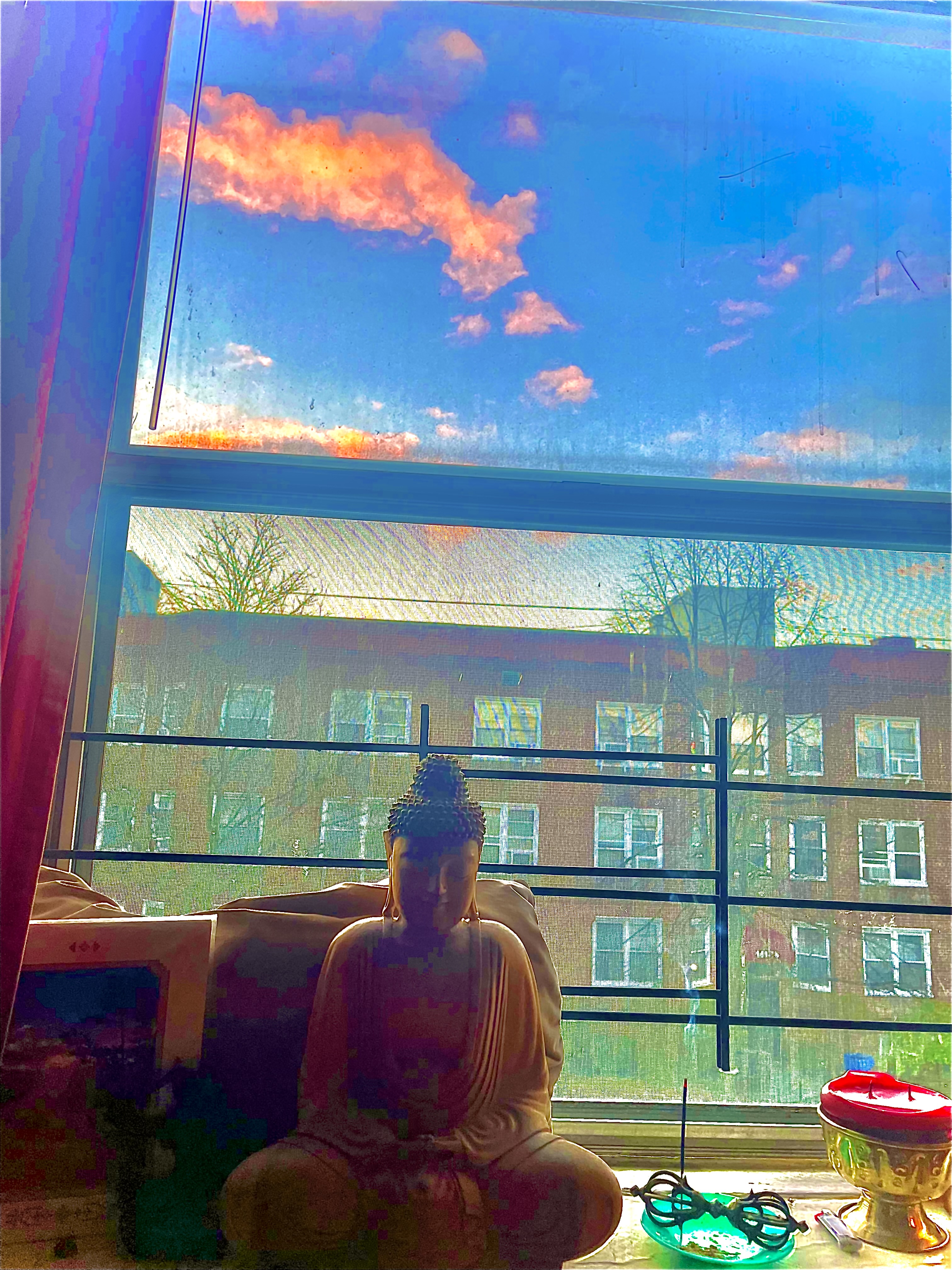
Conditionality is often talked about in Buddhism, but if you get to specifics that leads to the wheel of life. I’ve seen some people do wheel of life contemplations, a 12 nidanas meditation. On a basic level the incense smoke is conditioned. It blows out the window if the wind is going one way, or stay in the room another way. The smoke doesn’t decide which way to blow, it’s conditioned by larger forces. I’ve given myself headaches trying to think about the proper conditions to become enlightened, and had a period of depression when I could not control my conditions more. So be careful, but maybe you can build on positive contemplations from the previous stage.
You have your trauma brain, your fear brain and the mating mind, but there’s also the comfort mind. People seem to always be thinking about their comfort. Seems to me it doesn’t need that much time but I was neglected, so I’m not sure what my core comforts are.
The mating mind is also about status and jockeying for position. In fact the competition to get ordained and find a place in the hierarchy of a Buddhist organization can also be an outlet for this desire for recognition and power. You can let go of the need for status, comfort, recognition and quite a lot of shenanigans by just shining a light on it in the mindfulness of mental process stage.
One friend calls it the imagination. That's a simplifying move I appreciate and you can collapse mental formations and mind together, I just want to keep them apart for a time to honor what the Buddha taught. They have to be different and I make them different by having one more basic mental functions and the other more thinking and higher reasoning. I feel like the Buddha must have wanted to break the mind into two parts, the way he breaks the breath into two stages, for emphasis, to really get in there.
Feelings, mental functions and mind are a continuum of the brain functions, from quick thinking to slower thinking. The body is connected to the mental processes, the mind, relaxing all three has a symbiotic effect on relaxing and calming.
I believe asking the question, how could a mental formation support this meditation, while maybe there’s no immediate answer, opening a file in you life, could I build a mental process that supports my meditation, the answers could come to you instantly, and in 10 years.
The defenses are mental processes. The defenses are unconscious and semi-conscious ways the brain takes care of itself. This is why I think the sangha jewel is so important. We often don’t see ourselves clearly, and others can help us to see ourselves more clearly, and support progress on the path in crucial ways. The Buddha saw this 2,500 years ago.
I think of mental functions as Game of Thrones type drama level thinking.
8. Calming mental processes.
The first phrase that comes to my mind is, “big sky mind.” Calming the intensity and prevalence of mental chatter. You can think, I’m thinking right now. Where do thoughts come from? I have no idea, but meditating all day on retreat, the impetus of thoughts come up less and less. It’s actually scary at times, when you wonder at how blank you can become. In a way, my thoughts keep me company. I can feel a little lonely when I don’t have a lot of thoughts. But I also can get a read on all the input from my body, feelings and mind in a more balanced way. I’m more open to beauty when I don’t have a lot of chatter going on in my head. I can appreciate a full moon or the wind in the trees. And I can concentrate better when I’m not chasing down associations and puzzling at experience, or posing the questions relentlessly.
When I play chess, I think I need to be all in with attention and consider the possibilities in the most strategic way. Perceiving all the threats and weakness, for me and my opponent, and considering potential traps for my opponent. I like to play quick games, 5 minute “blitz” games. They give me the right level of contemplation, so that I don’t get bored or lost in contemplation and analysis. You need to develop sort of modules of thinking for various situations and have a strong opening library to quickly play the beginning. But sometimes when I’m done meditating, I don’t play as well. There also has to be a kind of aggressive energy that I don’t have after meditating. I haven’t found the right preceding activity for chess. It’s similar for sports, batting or running or shooting a basketball, or swinging a golf club. There’s a whole industry of books about how to clear your mind and find your center in various sports situations, it must be a very important moment.
Mental processes are more like the animal brain and feelings. I think in terms of survival instincts, fear systems, hunger and mating mind. Feelings and emotions are quick thinking, instinctual. They give rise to more complicated brain functions, but I don’t think they’re at the higher thinking yet. That will come later with the mind, which is next.
I’m a thrill seeker, counter phobic, so the fear mind is something I’ve overridden quite a lot. I’m also more of a depressive type than an anxiety type. But I know anxiety is a real issue for many people. It’s a regular question on reddit, how to deal with anxiety. Anxiety is about fear and the antidote is feeling safe. That’s a long complicated journey. We find mates to help us with safety. We build walls and live in gated communities for safety. Some Buddhists come to America and say that fear is the dominant feeling they’re getting. The 4th stage is calming the body. Feel how focusing on the breath can calm the body. Feel how the breath can calm mental processes. The process of meditation is about reclaiming unwanted experience, and integrating it, so just by allowing fear to exist, you’re reclaiming it.
Calming the mating mind isn’t easy. I don’t have a lot of solutions, except I try to redirect my mind, and I think of the positive precepts. The opposite of sexual misconduct is “simplicity, stillness and contentment”. Those aren’t easy projects to cultivate those feelings. But we’re in the feeling tetrad of anapanasati. Also in AA they have the acronym HALT. If you’re hungry, angry, lonely or tired, you need to take care of yourself. What is prompting my mind to reminisce about sexual experiences? Is there a pain in my knees or back? Am I bored, confused with meditation? Is there something I don’t want to think about that I should?
Mental formation is also the level of grasping onto pleasure and pushing away pain. This is a key area to decrease the reactivity of the mind. It’s still mental processes, breaking the mind up into body feelings, mental processes and mind is just a good way of breaking it down. This is the section for contemplating thinking driven by feelings.
Calming mental formations might also be about being less defensive. And that is achieved in relation with others. Like many elements of the path it’s impossible to just flip a switch to be less defensive, more things will get in and you’ll be defensive quite quickly. It’s not easy to work on these things, and of course psychotherapy and friendships are vital in this area. I have to say that honestly I haven’t met a person father along than me on the path who didn’t display some defensiveness. So while friendships and support are important, I question the idea of treating a guru as enlightened, you might mistake defensiveness as the path and the way to be. Many highly realized masters in modern times have quotes that display their limitations. I think it’s better to treat everyone as a friend. Teachers don’t have to be perfect.
Calming mental processes might mean quitting social media, reading the newspaper, and watching TV, even giving up dating. What would you do with all that time? Could you actually channel that all into the path? To me sitting on the cushion suggests a lot of changes in my life that I sometimes find hard to bring about. In meditation I realize how I could structure the conditions in my control, to support my spiritual life. That I don’t choose to always do that is a question I ponder. I’m trying to understand the anti-Buddhist shadow.
I’m not sure anapanasati is for managing lay life, but when I’m going crazy, I work to calm my mental formations. I ask myself to calm mental formations. I think turning the Dharma into coping for modern life is a mistake, but that doesn’t remove the useful applications. And honestly if it only works on retreat or for monks, I’m not sure if I’m interested, though it could be an intermediate stage to something permanent, and that would be worth it too.
9. Sensitive to the condition mind (citta).
Rosenberg writes about the 3 poisons of the mind, greed, hatred and delusion. Sometimes you can just think and then categorize it into greed, hatred and delusion. Most of mine is greed, then delusion. Hatred comes up when people interrupt my greed and delusions.
“The challenge of the ninth contemplation is to experience the mind thoroughly and fully just as it is, with whatever level of clarity we have. As we do that, we begin to see that mindfulness takes the energy out of our mind states, so that they arise but no longer have so much power to push us around. We no longer act automatically at their commands.”
Traditionally when you think of citta, the tradition goes to the skandhas (aggregates). Some monks I met on the internet who wanted to practice their English went straight to this teaching. The 5 skandhas are form (rupa), sensations/feeling (vedana), perception (samjna), conditioned mental formations and volition (sanskara) and consciousness, discernment, discrimination (vijnana). In the Theravadan traditions suffering arises when one clings to the aggregates (skandhas). Mahayana points to their emptiness (sunyata). Later tradition describes the skandhas as your personality that gives rise to dukkha (suffering). Later you will contemplate impermanence, this contemplation will lead to contemplating no self.
Conditionality is here again. Can you think your way to enlightenment? Thinking can help, but what is the extra things that really gets you past the line. Meditating so much that you lose all reactivity and neuroticism? Having good friendships, and ethics, devotional activity and study can help guide you always and in this contemplation.
Watching the mind is a kind of default meditation anyway, I think there’s not really a time when I’m not watching my mind. But it’s good to focus on the stick thrower instead of chasing the sticks. And one of my projects is to reduce my giving into the mind’s desire for stimulation, it’s as though it doesn’t know what’s good for it, it’s like a little baby that never wants to go to bed and rest. Supposedly when Stephen Batchelor went to Korea, he sat meditating asking the question, “what is this?” What is the mind? I breathe in sensitive to the mind, I breath out sensitive to the mind.
10. Gladdening the mind.
First off, meditation gladdens my mind. Second, a strong ethical practice avoids the tide of regrets. Third, generosity really helps. Good relationships and communication help. Non-violent communication by Marshall Rosenberg. I really enjoy understanding parts of the Dharma that were in the shadow.
The gladdening is about opening up transcendental joy containers for things that please you, and not holding onto them, but allow them to happen, and they count as supporting your practice because you can’t practice really depressed. Noticing what you do with various feelings in your mental state can lead you towards asceticism because, you know, you see through how fragile you are, and you can get away with ignoring quite a lot of pain. Part of the practice is to ignore your knee and back pain towards the end of a meditation. The Buddha didn’t say head pell mell into asceticism, but surely he was aware that you could get quite a lot of pain by just not avoiding it so vigorously. The project of Buddhism is to not be so reactive around pain and pleasure, and that is included in your thinking and general mental cast, to transcend reactivity and neuroticism, with creativity and integration.
Something that has gladdened my mind is all the work I’ve done in the Brahma Viharas. Metta, karuna, mudita, upekkha meditation work has helped to gladden my mind. The Buddha made this anapanasati teaching after 3 months of rain retreat, he added on a month to work on this meditation. I like to think all the hard work I’ve put into meditation up to this point contributes and supports the deepening of my meditation and that makes me happier. Hard work paying off. I think of my hard work trying to be in line with the ethics, coming to understand the ethics, and what that means for me in modern existence, the joy of restraint, not doing things that harm my general equanimity in my meditation and mindfulness life.
You can certainly think about worldly joys, there’s no problem with that. What are you peak meditation experiences? I wish I’d remembered those when I spiraled off into alcoholism. AA suggests a spiritual path to replace alcoholism, and I heartily agree. When I’ve been meditating a lot, intoxicants repulse me. Why would you hamper your awareness? Why would you need to change your experience? I wish I could remember the feeling that I was the wind, the leaves and tree swaying, the air, earth, water, space, fire (energy) and consciousness, after doing hours and hours of the 6 element meditation. And it taught me that insight isn’t intellectual. It is in the body. Remembering insight moments and peak experiences can make some people depressed that they don’t always have it, they can’t call it into being easily sometimes. That’s just more fodder for conditionality as far as I’m concerned.
Anapanasati has gladdened my mind. Of all the stages, I think the meditation has mostly gladdened my mind. The rapture, happiness, and steading of the mind is also there. And this all leads to the liberation of the body/heart/mind.
Buddha-nature is an idea that really makes me smile. Sallie King’s book on Buddha-nature is quite complicated, but reading through it felt important to me. My understanding of the dharma coalesces into a supportive practice that supports me in meditation.
I’ve always felt more healthy meditating, but steady could also be a description. I don’t wish to drink or be weird to get attention or make bad choices for variety. There’s something very steadying about intense meditation on the breath and these 14 contemplations.
I don’t experience the joys of deep meditation and grooving on the dharma when you see the whole net, with gems gleaming off each other, as something dangerous to become addicted to. It’s healthy and wholesome and if you chase the dragon of a nifty mind state you got once in meditation, well there are worse things, and lots of meditation will cure you of any addiction to meditation, at least with this addictive personality.
While I’ve only had glimpses of insight, those glimpses as short as they were held out a promise of a potential land of health and sanity, bright and clear, one different than the one I inhabit now. It’s OK to have rapture with a concentrated mind and enjoy it. It’s like really enjoying healthy homemade whole food, and seeing another person succeed and having sympathetic joy for them. It’s good and wholesome. It gives one a kind of come-what-may confidence. It’s not just a sales pitch, a false promise, fully embodied experience. There’s a new relationship to pleasure that is appropriate, adaptive, apt and not so reactive and desperate. It is steady.
Mudita meditation can also gladden the mind, celebrating other’s joys and virtues can really add to your gladdening.
Analayo suggests that reducing sensory input also contributes to gladdening. Maybe modern living is overstimulating and making us ungladdened.
11. Steadying the mind (Samadhi).
How can I support these deep meditative states of absorption and concentration?
Samadhi is the last stage on the 8 fold path, the 11th stage here. It’s often described with the jhyanas. There’s a pattern here. One stage is to calm the body, the mental processes, and here steady the mind. That’s a kind of capstone to a tetrad. Think of that when you’re relinquishing in the final tetrad. Indeed, letting go is a major step in Buddhism, not superficially, but just letting go out of integration, maturity, sobriety, detangling, and tolerating questions with negative capability. It’s the ultimate grasp of conditionality to accept things as they are. In this stage we’re accepting the mind the way it really is, in all its flawed glory.
One thing I feel more steady with is when I’m clear on going for refuge, after devotional activity like puja and mantra. Another thing that feels steading is when I’m remembering the refuge tree, I’m remembering the 5 Buddhas, the teachers of the past. The history of Buddhism can be really supportive. I don’t just read about great past teachers to get inspiration but I also gain that along the way. Are there past Buddhist teachers that really inspire you? For me the historical Buddha, Milarepa and Kukai do that. Sometimes I think about archetypal Buddhas supporting me.
The prostration practice that I have done where I imagine all my male relatives over one shoulder and all my female relatives over another shoulder. Sometimes I imagine my entire line of ancestors supporting me. To go forth into the monk life in the Theravadan tradition you get the permission and support from your parents.
There’s a certain amount of faith and patience involved in steadying the mind. That this really is worth it, that the path is worth the hardship. That confrontation is just as good as comfort in spiritual life. That the dark nights of the soul, a reference to St. John of the Cross, when the spiritual life isn’t giving back, and still you meditate, study, ethically strive, do devotional chanting and prostrations, and fellowship. It’s worth it to give and not get.
There’s also the luck to be actually practicing the path. In a way it’s incredibly improbable and lucky to be on the path. Recognizing luck seems important to me, it’s a privilege. There’s a lot of negative talk about privilege but when you have it in the spiritual life it doesn’t seem as bad.
Resilience needs support and strategies, willpower alone isn’t the answer, but the incredible determination and willpower are important. When rapture seems to rock the ship so much you think you’re going to sink, distinguishing healthy rapture from mania. Sometimes I think it would be easier to not live the spiritual life, to not be mindful. To understand the forces against the spiritual life, where you stop meditating, studying, devotion, ethics and fellowship. When relationships are so disappointing you wonder if you want the pratyeka path.
My descent into addiction lacked steadiness. The confidence that these states of concentration and absorption would not carry me through difficult times, I gave up. There was a childish impatience, tantrum. I sit in the park and watched my children play for hours and hours, and I’ve watched children tantrum over not getting what they obviously can’t get. Addiction was my middle aged tantrum with life shortening and life wrecking consequences. Steadying is the opposite of that.
I’ve often heard people say take a breath, the breath can also be a steadying thing, provide guardrails to the mind.
The work done on the Sublime Abodes meditation can also support steadying. The increased positivity and empathy for others, along with equanimity.
12. Liberating the mind.
I love the ideas of liberation and freedom. Just the word really jazzes me up.
When they feel kind of hard, the contemplations, like I’m not sure I can just liberate my mind, I focus more on remembering and building work that I’ve done, and notice liberation that has already gone on. How when I meditate a lot the hot weather doesn’t bother me as much, and how other people can’t really press my buttons, or get my goat. I think of the equanimity and the fruits of past meditation that I have already felt. And in all my listening for metta, gladdening and all the other complex hearing, I’m listening for experiences of liberation. Letting go of negative reactivity, not having traumatic responses, but feeling safe and strong, ready. Don’t fool yourself, being on the path has liberated you significantly, and even though you haven’t got a halo around you head and a million followers, that doesn’t mean you’re partially liberated.
When you see how every stage builds on every stage, you’re starting to see Indra’s net. Indra’s net is a net of gems that reflect off each other, they intensify each other. You’ve gained some insight into how emotions can drive thinking, how mental processes can drive thinking, like the need to be an alpha male or female can really create a lot of unnecessary drama, or how your mind thinks you’re an introvert so you don’t see how you’re an extrovert, and on and on and on. Discursive dissembling thinking. When you let go of trying to find or please your mate, when you let go of trying to get the past changed, when you let go of wanting things you can’t have, when you’re connected to reality, and in this stage the three marks of existence and accepting the deepest truths about conditionality, you’re starting to liberate yourself from conditionality, transcendental unconditioned happiness. Increasing the percentage. The Pali Canon says the Buddha teaches the Dharma that is good in the beginning, middle and end, and he’s always pulling on the oar of enlightenment. There comes a point, maybe it’s imaginary or requires faith to believe exists, but you finally get it to the degree it can be gotten. It doesn’t get rid of your back pain or help you relate to your difficult uncle, but it gives you some kind of inner peace that is unflappable. Maybe it’s entering the Dharmakaya. Kukai, the Japanese founder of Shingon, Vajrayana in Japan, was all about the Dharmakaya. There's freedom in that.
Rosenberg writes a lot about attachments. I have a psychology background and attachments are good, so right off the bat, I’m not into this way of talking. But I’ve found that sometimes when I have aversion to something, there is often something in there that I miss if I just dismiss it. For sure I’m cling to my ex who I see twice a day, when she drops off my daughter and picks her up. I still wish we were together, and it’s hard to see her every day almost and not be able to be like we used to be. So I cling to the relationship I wish we had. I’m sure it would be good to let go.
He also talks about the fetter, reliance on rights and rituals as ends in themselves. That’s a favorite of mine. Overly officious religious people rub me the wrong way, and being honest, sincere and authentic are really important to me.
Just like metta meditation, you notice what doesn’t liberate your mind and you clear out the brush and weeds so that liberation can grow. In fact the Brahma Viharas or the Sublime Abodes are work well with liberating the mind. Developing positive emotions, equalizing in the last stage, appreciating others’ virtue and joy.
13. Focus on impermanence.
These last 4 are the most refined, most abstract if you don’t connect with them right away. They build on each other, just as every stage could say to be reinforcing the others.
Conditionality is complicated, and impermanence is just one aspect of it. Conditionality means you puny actions can have impact in the world. Conditionality means you being isn’t fixed, you can get enlightened. Conditionality means bad things won’t last forever.
Hericlutus said you can’t step into the same stream twice, it’s always changing. I haven’t been back to Madison Wisconsin, which I spent 1972-1990. It’s etched in my mind. I was a taxi driver one summer, and I went all over the city. Supposedly there have a been about 15 buildings built on campus alone since I left. The place has changed massively, but not being there it’s only etched in my memory. Examples multiply, one is I’m always surprised when I look in the mirror how old I’ve gotten. My insides feel the same. You could even turn impermanence to the ongoing meditation, the breath you’re, nope, now it’s a new one, the body, feelings, mental processes, mind, even your insight. “One day you sit and feel the joy of meditation as if you're a virtuoso; the next day it's as if you've never meditated before. You can't even find your nostrils.” (p. 118 Rosenburg)
The good news is you can become enlightened because your unenlightened state could be impermanent. You can change.
The happy side of impermanence is that unpleasant things end. We’d like them to end sooner, but everything ends, including things you want to end.
There is a negative and painful side to impermanence. El Dia de los Muertos is a good day to realize how many family members have passed, and how your memory can’t be transferred to your children, that memories of people will die out. To me grief is a related topic. Probably not the best thing to focus on grief, but I do think it’s a prominent part of human experience. Wes Anderson’s film Asteroid City asks the question, how is life meaningless if we get so sad when we lose people?One day you sit and feel the joy of meditation as if you're a virtuoso; the next day it's as if you've never meditated before. You can't even find your nostrils.
14. Focusing on fading away (Virāga).
My neuroticism and trauma responses fade away. My immaturity and lack of integration fade away. My reactivity converts into creativity and mindfulness, apt, appropriate, helpful. My focus on nonsense lessens and my going for refuge deepens. I try to shake off the mud, but some sticks still. I wipe it on a rag and the rag isn’t perfect, and now I have a dirty rag, that makes other things dirty. Unenlightenment doesn’t go away, snap, like that. It’s a gradual fading away.
Spiritual bypass is real, and people hope that you can just meditate a lot and transcend all your problems. Perhaps work off the cushion in therapy, and through friendships to grow up.
Virāga is a disentangle. Untying those difficult knots in your brain. What do I need to disentangle in this meditation? What do I need to disentangle off the cushion to support my meditation, to support my practice? Certainly calming the body, feelings and primitive mind, and channeling them into practice. There’s almost a synergistic lockdown on the breath that this meditation just lock steps you through. It’s really quite ruthless. If you’re really doing this, you can’t help but really focus on the breath, in a revolutionary way.
Every day hordes of psychologists study how to do that for worldly things. It’s not that easy. Having children gives me a sense of people moving through development.
Everyone is different, but this is where I have to confront my fear of enlightenment. I’m afraid I’d be like a robot, that I would have to give up the trauma reactions and neuroticism that I’m so accustomed to, that I mistakenly feel is who I am. My Buddha-nature asserting itself is honestly very scary to me. To lose interest in samsara is to say goodbye to familiarity. You can’t get depressed or waste life, there’s no looking back because fading away is asking for you to begin the real changes. I can’t just cheat on my diet and eat something with cows milk in it. I can’t just have a wank. I know it’s because I want to, and it’s what’s right, but I’m afraid of losing my vices and small pleasures. I can still have my pleasures, but it’s not the same the day you really quit drinking. You can’t drink anymore and the party is over, the alcoholic way of life is over, and that’s a very step because it’s what you know. So to with stepping towards enlightenment is going to bring out every fiber of my sabotaging self. And those are just thoughts, in a way I am to stop identifying with the content of my mind. It’s profoundly disorienting. What about my guilt about my mistakes? I live off that. It is in this stage where I confront all these fears, and see them for what they really are. Holding me back, giving me safety I don’t need. I really feel like this stage needs a lot of courage.
And disappointment. It’s not all it’s cracked up to be. Yes, the concentration is pleasurable and I can meditate more and more to consolidate these gains, but there’s also a kind of “is that it?” aspect. There is no different ledge I’m stepping onto, I’m stepping into outer space, with nothing to hold onto, and it’s kind of boring. Boredom is my bedrock fear, it’s sustained my alcoholism. My traumatic reactions and neuroticism was just drama for entertainment. If I’m not these set of problems, then what am I? Nevermind, it’s hard to hold this insight long at first, so I can watch myself losing the insights of viraga.
I’m a little kid again, afraid, as I sit in the empty apartment before my parents come home from work. Except now I’m not resourceless, and I’m not that little child. This stage is where the deepest fears come up. I remember David Smith in his Record of Awakening talking about a stage of deep fears, nightmares of smashing into a wall while being driven. Rosenberg talks about his fears of Nazism, an obsession of his growing up during the Holocaust. For me it’s being alone in an apartment, bored. I could play with lego or read a book, or watch TV when they didn’t have children’s TV on all the time, there were only 4 channels in black and white.
Coming to grips with changings is what this stage is about to me. What will I be like as I get closer to being enlightened is a threat. And now I don’t distract myself, I face what is coming up. It feels profoundly unique to me, and I’m giving that up. Everyone can act like a good Buddhist, but this is actually becoming a good Buddhist. No amount of friendship can help me with this aloneness. The breath is your best friend, and it’s a relief to focus on that. All the gladdening, steadying, pleasure and happiness are used to cope with these hard moments. You flow back to consolation instead of confrontation.
15. Focusing on cessation (Niroda).
Niroda is part of the causation formula, that I sometimes chant:
imasmiṃ sati idaṃ hoti
imass' uppādā idaṃ uppajjati
imasmiṃ asati idaṃ na hoti
imassa nirodhā idaṃ nirujjhati
This being, that becomes;
From the arising of this, that arises.
This not being, that does not become;
From the cessation of this, that ceases.
Niroda is unbinding, cessation. How is fading away different from cessation? Cessation is the final fading away of desire and craving. I’m not sure desire goes away really, it’s probably just neurotic desires that unbind, and suffering ends. The causes of dukkha cease, the voluntary suffering I create has ended.
This meditation plays with many things. One is between circumstances, and your efforts. In this one I feel like circumstances are emphasized, maybe because of the formula of causation. The cessation of the path is happening because you’re setting up circumstances. You are taking responsibility for the circumstances to move towards enlightenment, you’re fulfilling your wish. If I was right that you face you fears of enlightenment in the previous stage, in this stage you consolidate and stabilize what’s left, feel comfortable in a an uncomfortable new way of being. The pattern in the stages is to observe then stabilize. After the ecstasy, the laundry. For all the high falutin talk, you still have a life, that isn’t going to change just because you’ve been working on yourself, or rather what you thought was yourself. What yourself is wasn’t quite what you thought it was, and it’s still there, but it’s just not quite what you took it to be, the world isn’t as solid as you thought, it’s in flux, it’s in process. The great chain of being is a phrase from Christianity, but Christianity can have insights that Buddhist use.
You can’t talk about things beyond conditionality, but there’s not nothing there in the transcendental, or rather the nothing there isn’t insignificant. I don’t know how to talk properly in this realm, and I don’t want to be injecting any wrong mystical notions in here. It’s like the weird and indistinct plinths in the movie 2001. It’s not even as concrete as that.
Cessation of what? I think it’s cessation of not attending to reality, of being led around by false refuges, and convenient stories, being reality oriented, not defensive, delusional or grandiose. It’s the ultimate maturity and integration to see things as they are. It’s the mind’s job to cope with whatever utmost wondrousness comes upon.
16. Focusing on relinquishment.
Paṭinissaggā means giving up, forsaking; rejection, renunciation. It means going back to your natural state, which to me is Buddha-nature, which is a really complicated notion, but one that can be simplified, is just a pure Buddha-nature. I can’t say I see around the concept and how it functions successfully, except psychologically in me. It is the attainment of the path, the ultimate fruits of the path are all achieved. There’s a tradition in Zen that it’s nothing special, there’s a kind of laughter that that was it, really? You wonder if those people really got to the end of the path. Anyway, there is no end to the path, there’s just pathing.
Letting go is a nice idea, but it’s not something you can do easily because it turns out we have projects, and our projects assume commitments, and commitments lead to clinging.
On ordination retreats in Triratna you prepare for the archetypal sadhana by tearing yourself down in a 6 element meditation. There’s a handoff after you break yourself down, it’s a kind of spiritual death to do the 6 element meditation, to merge with a mythical identity of an aspect of enlightenment that resonates with you. It’s a sacred relationship of the mentor that gives you this entry into the order.
I was so jazzed by this meditation, off retreat, I would do it in regular life. I started to feel too dismantled, too fragile and exposed. Someone advised me to only do the 6 element meditation on retreat, not in ordinary life. The depth I craved was something you could only do in certain circumstances. That was a huge shock to me. Maybe these deep states of meditation aren’t meant for the regular world, you almost go insane trying to keep a retreat atmosphere in regular life. The cycles of retreat and re-engagement are meant for Mahayana, people who come off retreat. A retreat is a set of circumstances that support intensification of effort but the intensification of effort in regular life might not support the insights you could get on a retreat.
I went on a Brahma Viharas retreat in 2002 for 9 days and it blew my mind. In a way I’ve been trying to get back on that retreat. I felt healthy and whole in a way I’ve never felt before. The glimpse over the wall of samsara hooked me on the path. Whatever dysfunction and mistakes that flowed from that retreat, are on me, my handling of insights and intensity. I’ve screwed up my life quite a bit, I went a bit crazy. I don’t think everyone has to go crazy, but that happened to me. I tried to hold on to that in ordinary life, when you can only get these insights away from ordinary life, or at least I can’t. I think this is why the Theravada focus on creating a monastic order that is allowed to hold these truths only under certain circumstances. That’s my experience, and everyone who goes through these 16 steps of anapanasati might come to different conclusions but this was my conclusion for me. I can only hold these deep insights under special conditions. And I try to maintain them in regular life, and that’s hard and painful. Let the depth of insight stay on retreat, and get back to the laundry. Don’t cling to retreat insights in supportive conditions, when you’re not in supportive conditions. I wanted retreat conditions in regular life. It is a fundamental mistake. Therefore the cycles of intensity and wearing off are natural and appropriate to retreat and engagement cycles. Accept the given, understand conditionality. This is my koan. How do I tend the fire of the retreat insights in regular life, without going crazy?
Taking the teachings the right way is hard and in the rarefied air of these last 4 contemplations, keep grounded in the breath.
Letting go of former partners is a quintessential clinging for me. I know it’s worldly, and that’s not really what relinquishment is about, but I can’t help think along these lines. It’s patriarchal to imagine you own someone. Nobody owns anyone. This stage is asking you to let go of your impossible projects, and that’s maybe a fairly worldly example, but your examples are your examples, and honestly it wouldn’t hurt to cling to past romantic relationships in my mind. Relinquish them.
Relinquishing is the hardest maybe, letting go. People say, “let go,” like it is easy. That’s why I don’t like talk about clinging. It’s a really high order task and sacred. Letting go of lizard brain fears is hard. Letting go of the mating mind is hard. Letting go of spiritual bypassing can be hard. Growing up is associated with doing things you don’t want to do. The race between maturity and senility.
Postscript:
The four foundations of mindfulness connect this meditation to the Sattipathana Sutta. There are 4 zones of focus: body, feelings, mind and insight.
The seven factors of enlightenment are: mindfulness, investigation, energy, rapture and happiness, calm, concentration, and equanimity. They are called the bojjhangas. There are teachings on how to use the seven factors with the 5 hindrances: sensory desire, ill-will, sloth and torpor, restlessness and worry, and doubt.
If you’ve run out of things to contemplate, and if your meditation doesn’t feel too busy, you can weave in these supports as well, or be conscious of how they’re woven in.
It might be that these contemplations are congenital and weave into the meditation well. I find that the intensification of anapanasati has supported an intensification and synergy with the Brahma Viharas or the Sublime Abodes. I have mentioned it in the above text.
Afterthought questions:
Do you channel your sensuality into describing the breath? Obviously the middle way and Buddhist ethos means don’t feed sensuality energy, but does a highly sensual breath compensate for brahmacharya (sexual abstinence) or help attend to the breath?
Breathing in you think viraga, disentanglement, can you think about how to drop your problems, change your problem areas? Or is it just a command, “viraga”? What is the role of thinking in the meditation? Could you stop thinking? You just don’t add energy.
Does lockstepping through stages work or should you wait to really feel rapture and happiness to go on? Are there signals that tell you to proceed, you’ve steadied your mind enough?
Play with it. Do it in reverse. Spend 20 minutes on every stage. Go longer and shorter. Enjoy





 Posts
Posts


