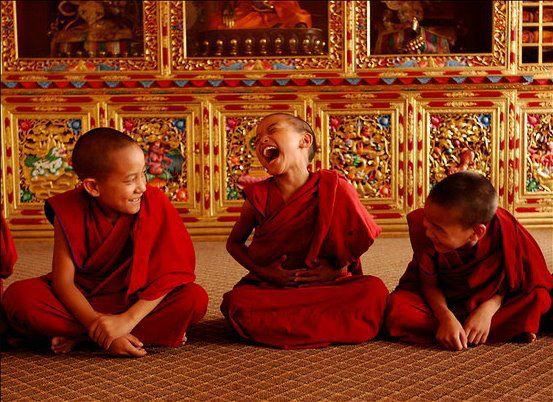


I think some personality types benefit from devotion and supplication. Maybe all. It's seen as important in substance abuse recovery. It might be part of a complete psychological makeup trying to be whole and integrated.
Sports is a distraction and a diversion. It feels important to me in my relationship to one of my sons. NYCFC started some time after my son got into soccer, and we bonded over going to games.
One of the players is Maxime Chanot. He was born in France, but he plays internationally for Luxembourg. He's played in England, France and Belgium, before he came to NYC. He's played for NYCFC for 5 years, only missing the first year of their existence. No other player from the 2016 roster is still on the team.
Maxime has a devotional routine you see him do. He touches his head, belly, and two shoulders, holds his hands up, looks upward, how bows down twice I think. He prays in the laundry room in Yankee Stadium. There is a caplin who comes midweek, and pregame.
Reading about Uruvela Kassapa in the Mahavagga. This kassapa keeps saying, "But he is not an arhat like me." In a way it's a doubter of the Buddha, but proving him wrong by miracles is the wrong way to go to my modern sentiments. The Buddha confronts him and he just snaps out of it. I'd like more information. Just like I'd like more information about the gradual teachings that converts Yasa, his father, mother, and his father's ex-wife (nice detail there). In a way what comes down to us is pretty sketchy. It can fill up a bookshelf, but it's so ancient, it's hard to get through to it. I'm trying though. Someone asked on Reddit if as a Buddhist you really had to read the Pali Canon. I'd say you don't have to, the only have to is uttering the refuges and precepts, but as others pointed out, couldn't hurt.
Ñāṇamoli Bhikkhu died in 1960. He led an interesting life, he was an intelligence officer during WW2. He and his friend Ñāṇavīra Thera went to Sri Lanka and ordained as a monk. My heart warms so much when a friend is mentioned in a Wikipedia entry about a person's life.
He was taught by Nyanatiloka, German born, who was among the earliest western monks in Sri Lanka. Nyanatiloka went off to Sri Lanka in 1903 at the age of 25, and went on to Burma. You can read about him in a biography that is online.
Nyanatiloka met U Dhammaloka, Irish born, who ordained in 1900.
Nanamoli left us an amazing modern edited book from the Pali Sources about the life of the Buddha.
How it is that I can read these awesome texts in English today is amazing to me.
People Gotama met before enlightenment and his family
Ananda remembers the discourses, what the Buddha said. It is his great memory that comes down to us. He was a first cousin to the Buddha.
Upali remembered the monastic rules. "He was ordained before the princes, putting humility before caste." He was a low caste barber.
There is Asita, an ascetic who laments he will not live enough to see the Buddha. "Among the bipedal race he is unique."
King Bimbisara offers the Buddha a lot of money to be a general in his army.
Alara Kalama was a teacher who taught Gotama everything he knew on his spiritual quest, but he kept going.
Uddaka Rāmaputta was his second teacher. The teachings do not lead to dispassion, fading of lust, cessation, enlightenment.
Tapussa and Bhalluka: Two merchants who came upon the Buddha while he was freshly consolidating the insights of his enlightenment under the Mucalinda Tree. They gave him some food. The Buddha wasn't really into eating but the Four Devine Kings persuaded him with food from the 4 corners of the world, rice cake and honey. His first meal after enlightenment. Tapussa and Bhalluka took refuge in the Buddha and the Dharma, but there was no Sangha yet to get the three jewels. They were the first disciples of the Buddha.

Details:
Gautama talks about the need to go forth from home life: crowded and dusty.
I would add crumbs. My daughter eats pretzels in bed before she goes to sleep, and there are crumbs.
Gautama went off and was in nice parks where deer came up to him and peacocks were around. I can hear their cries. He talks about hair standing on end, what an amazing detail, fear and dread arose, which he subdued. I kind of like these details of the struggle.
The Buddha's family includes his father Suddhodana and mother Maya and his foster mother Mahapajapati Gotami.
There are bits where they say he went forth young, and don't mention a wife. It is possible that that whole story line cropped up later, but in the legend his wife has a name, Yashodhara.
What does it add to the myth that he went for not as a late teen but as a father at 29? Does that add more gravity, more drama? Does that make it more relatable?

"There are five strands of sense desire. What are these five? Forms cognizable by the eye that are wished for, desirable, agreeable and endearing, bound up with sensual desire and tempting to lust. Sounds cognizable by the ear... odors cognizable by the nose... flavors cognizable by the tongue... tangibles cognizable by the body, that are wished for, desirable, agreeable and endearing, bound up with sense desire, and tempting to lust.
(Source)
Bleeding Edge by Thomas Pynchon:
"Shawn tells her the Buddhist Parable of the Burning Coal. “Dude is holding this burning-hot coal in his hand, obviously suffering a lot of pain. Somebody comes by—‘ Whoa, excuse me, isn’t that a burning-hot coal in your hand, there?’ “‘ Ooh, ooh, ow, man, yes and like, like it really hurts, you know?’ “‘ I can see that. But if it’s making you suffer, why do you keep holding on to it?’ “‘ Well, duh-uhh? ’cause I need to, don’t I—aahhrrgghh!’ “‘ You’re . . . into pain? you’re a nutcase? what is it? Why not just let it go?’ “‘ OK, check it out—can’t you see how beautiful it is? lookit, the way it glows? like, the different colors? and aahhrrhh, shit . . .’ “‘ But carrying it around in your hand like this, it’s giving you third-degree burns, man, couldn’t you like set it down someplace and just look at it?’ “‘ Somebody might take it.’ “So forth.” “So,” Maxine asks, “what happens? He lets go of it?” Shawn gives her a nice long stare and with Buddhist precision, shrugs. “He lets go of it, and he doesn’t let go of it.”"
There are some other fun quotes:
"And who, really, is so fancy-schmancy they can’t appreciate “Volare,” arguably among the greatest pop tunes ever written? Young man dreams he’s flying in the sky, above it all, defying gravity and time, like having midlife early, in the second verse he wakes up, back on earth, first thing he sees is the big blue eyes of the woman he loves. And that will turn out to be sky enough for him. All men should grow up so gracefully."
and
"...sounds of jollification and a music track including Motor City psychobilly Elvis Hitler, at the moment singing the Green Acres theme to the tune of “Purple Haze” and providing Maxine an unmeasured moment of nostalgia so unlikely that she begins to feel targeted personally."
A redditor went pretty hard at Jack Kornfield. His talk on an Oprah interview wasn't orthodox Buddhism. Here is my response (since expanded upon here as I thought more and more about this):
Feels like an Oprah interview is setting him up to be a more than Buddhist teacher and being open to a more Abrahamic background, to widen his audience beyond the 0.7% Buddhist in America. He has been ordained by the marketplace, his books have sold. I've read most of them and his first book is about the various meditation practices he encountered in Thailand, published in 1977, feels like good information.
Kornfield, strikes me as a good writer. Good writers don't necessarily start movements or make a lot of hay in Buddhism, but I also like Stephen Batchelor. There's a synthesis going on with Buddhism as certain western ideas are being integrated into Buddhism. It feels like some of the negative aspects of Christianity can avoided, and there's a hope in a religion that is going to be more suited for our current times.
There is a syncretism going on in America, and it's hard to imagine the Buddhism that is going to emerge. The lay Theravada tradition, with the lay going for it instead of just trying to make merit, along with their worldly lives, is another example of Americans trying to have it all.
New movements have always gotten pushback from traditionalists. Time will tell if the American lay tradition of Theravada is going to be a thing (IMS).
I'm not ready to cast Kornfield out for a populist and honest interview with Oprah, but it's good to get information and to see how far a perspective can go. Every country reconstructs Buddhism, and that is OK. I feel like Buddhism is strong enough to be tested by being adopted to a new country in the modern world. Spirituality has always been adapted and adjusted to a culture it enters. Look at the spread of Buddhism in China. Maybe you can't snuff out what Buddhism has to offer, maybe we want something beyond a secular humanism, which can be a glorious spirituality too. If we're allowed to explore and make sense of things, not just swallow doctrines whole, maybe we can sift out an essential Buddhism, or an American Buddhism that works. As the many sects of Buddhism show, there are lots of possibilities. Americans don't take to being told how to be. That is both our strength and downfall.
The quote "Buddhism is not just whatever some white guy makes up after visiting Thailand and learning meditation" is a bit provocative, but it makes the point that perhaps syncretism needs to have some limits. It's true that if you want a good brand of Buddhism perhaps don't experiment with a new one, but I myself am more flexible and think that new movements don't need to be snuffed out. Of course rigid fundamentalism trying to snuff out other traditions, is also a American tradition as well. I'll be interested to see this dance play out with the remainder of my life.
We need traditionalists who make us aware of our choices. We need innovation and creativity as we adapt to new circumstances, too, that is the essence of mindfulness to me.
My feeling is that the creativity and innovation of Chogyam Trungpa was too wild, not disciplined enough. On the other hand, I don't want to be a monk who can't touch a woman, when it's an elderly relative who could use some support with some stairs. The real question is what really works and are we just adopting something without really changing. The change of moving towards enlightenment can be quite challenging and it's hard to sort out what growing pains and dark nights are necessary, and which ones are not. The push/pull of a lay Theravada movement is utterly fascinating to me.
A vibrant dynamic movement, and intense devotion will look cult like, will be suspect. The sexual misconduct in American Buddhism has been pretty damaging. Mistakes have huge ripples throughout time that are not easy to see. Trying to do things will always invite criticism. We want a solid foundation but nothing is perfect.
If Buddhism came to America in the 1840's with Chinese immigrants we've had it on this land for 180 years. I think one time I came up with 250 years. Both estimates are minuscule over the history of Buddhism. Buddhism came to China around 67 CE, maybe 150 CE. They've had Buddhism a little longer, though communism has tried to snuff it out. My point is that the newness to a continent and the newness to a culture churning and changing is going to produce some interesting results. Maybe traditionalism is what is needed amongst this churn, but some periods are more open to change. I appreciate the redditor drawing the traditionalist line, but I feel like Kornfield's journey is his own, and his early books provided good information to a culture starving for Buddhist information. There are some Buddhist teachers that adopt some Christian language, I imagine in the hopes that it will help spread Buddhist ideas in a Christian America. I'm turned off by that. And maybe the criticism that adopting a foreign religion doesn't get around the various tricks and boondoggles of religion, but it feels like there's a minimalist essential Buddhism combined with mythological awareness and sophistication, and fear of literalism, can really make a religion for the times we live in, here in America. If it can draw this athiest in, I think anything is possible.
I would also add that I can't buy into lineage ideas being paramount. I respect people who feel that is important, but sorry, too much time has gone by and it's great if you got it, but I don't think that means you can't make a new movement without a lineage. The Buddha created a new movement that wasn't there before. Not that these new people are on his level, but it's possible.

 Posts
All Comments