Tuesday, February 21, 2017

Listening to myself

It's a hinderance of mine that I get excited about ideas. It's sense pleasure once again leading me away from the focus on my breath. I heard myself saying, "Even if I don't get enlightened, I have gained a lot from being on the path, and working to reduce the distance between myself and the Buddha." That doesn't take into account the dark night of the soul, The Silence, and the hope of seeing the transcendental pleasures of the path. Enlightenment is experience far experience to me, but at a certain point in my meditation today, I felt a little of the craziness churning in my mind, settle down just a little. I guess I feel that is worth it, though I think meditation needs to be beyond good feelings, because that's just chasing sense pleasures again. You just do it, in some ways, regardless of the reward, ignoring spiritual materialism, relinquish, a little, for a second, the endless project of chasing positive sense pleasures and pushing away negative experiences.

Chapter 4 Psychotherapy East and West

Psychotherapy East and West by Watts Chapter IV: Through A Glass Darkly:

The chapter starts out comparing scientific views that are experience far for humans, and that it's not going to be the road to liberation except that it does give insight into some hooey. Then he runs through the confusion between western "ego" and eastern "ego".

Watts discusses difference between Freud and Jung, and is frustrated that even though the Jungians learned a lot of eastern religion, they didn't seem to grasp it beyond psychology. Through that section, I was thinking about how Stephen Mitchell has his grand unification theory of relational psychotherapy, and that drive theory was overturned. I bet Watts would have loved Relational Concepts of Psychoanalysis. I think more about The Denial of Death, Donald Winnicott, Melanie Klein, Fromm, existential psychotherapy, Kohut and self psychology, systems theory, interpersonal psychotherapy, and attachment theory. Freud is a reference point, but his grand theory has been debunked of late, in favor of relational psychoanalysis.

Watts seems to see how the denial of death is in play, says you can't live unless you face death. Kafka is often quoted that the meaning of life is death. Watts is also into field theory which is a close cousin to systems theory.

Much intellectual discourse is tilting at windmills. Nowadays in NYC most of the psychotherapy is done by social workers, who have a kind of curious and supportive approach, and few have further training. Maybe they have read The Drama of the Gifted Child.

Positive psychology is just starting out, not just about the deficit model. We have a long way to go. The conflict between the pleasure principle and the reality principle is something I think a lot about. Watts sees the double binds of cultural institutions is at the heart of the ishkabibble. The teachings of the Buddha are a way to enlightenment and liberation!

Then he shifts to existential psychotherapy. That is not going to understand the Buddhist project either. Watts is very quotable: "The stereotypical attitudes of a culture are, of course, always a parody of the insights of the more gifted members." Creating a meaningful life is a better project than a happy life, to me, but liberation is something different all together.

He explores the idea that we in the west must be anxious, guilty and insecure. Protestantism infects our thinking whether we're protestant or not. Everything in modern society conspires against liberation. He has a dim view of history, almost likens it to a hoarder of strings and rubber bands and whatnot. Every moment is a rebirth of possibility to be creative and not reactive.

Watts describes one of the fetters: that life is nothing and life is eternal are two ends of the spectrum that are to be avoided.

He seems to know about Sullivan and Frida Fromm-Reichmann, a contemporary psychiatrist of Freud from Germany, who emigrated to the USA during WW2. When you think of it, Watts is pretty well read for someone who is not a psychotherapist. I'm warming to this book as I read it, and get used to his style of writing. Next blog on the book will be about the rest of the book.

Monday, February 13, 2017

Alan Watts reprint of 1961 book

The First Half of Psychotherapy East and West:

In the first chapter of Psychotherapy East and West he skates along big ideas, and typically in academia you're supposed to get into smaller chunks to make sure you've got it right. In some ways Watts is kind of refreshing and there are interesting insights, like that you're going to have to get into social commentary in psychotherapy.

The second chapter is a mash up of physical theories, Wittgenstein and anthropology. The question whether good creates evil was raised, that was my favorite part because it reminds me of the movies MegaMind and Watchmen, who have that theme as well.

Parts of the chapter, I was scratching my head as he switched from topic to topic without transition sentences. It's a kind of riff, and you could see why he was popular in the counter culture when that type of writing was more acceptable. He had some interesting theological views, that in the book of Job, the devil is an adjudicating angel. And he notes he could never get angry at Judas because he just followed Jesus' orders. He thinks schizophrenia is caused by double binds, strong pulls in opposite directions. When the mother tells the little boy, "you don't want to play in that muddy puddle," when the kid really does.

The third chapter on liberation is a kind of history of eastern religions. Watts takes Madhyamaka as the form of Buddhism he is taking about when he generalizes about Buddhism, Vedanta and Taoism. It's an odd choice, when he's speaking in a kind of perfection of wisdom way of Chan.

Watts talks about the caste system of Hinduism, but forgets to mention the "untouchables", the Dalits who have used Buddhism as part of their liberation theology in present times, since Ambedkar converted to Buddhism. Ambedkar died in 56, so the movement had been going for 5 years at least. And yet I don't think right or wrongness in his generalizations and characterizations touches his arguments much, such as they are. Watts' style of writing is a kind of challenge in every statement, a kind of interpretation of a philosophy that is at once hard to evaluate, and bold sounding.

The liberation chapter could almost break the chapter up, because he goes on a long riff about reincarnation which is fairly interesting. Watts suggests that all the magic and miracles are for the weak minded. He points out that westerners see reincarnation as a good thing, where as in the east it is meant to be liberated from.

He compares Taoism and Confucianism, then compares Taoism to Rogerian psychotherapy. He looks at the influence of Ch'an Buddhism from Taoism. Then he throws in a dash of neuropsychology. It's a heady brew to gulp down, but occasionally there's an interesting sentence, and a new way of looking at things.

Many times I find myself asking about a statement about Jung or the other topics, "Is that really true?" I have no way of verifying many of the wide claims Watts makes.

I like the concept of distance of excessive reverence: The further away the prophet, the more reverential there must be, and thus a vibrant tradition "dies of respectability."

The question of sexuality is discussed, but he quotes Vedanta, which I'm not as interested in. The Mahayana is supposed to enter the world and therefore one is more likely to be married as a Mahayana Buddhist.

A tour de force is what they call these kinds of books, because it assumes a lot of background and interpretations on that background which are hard to know how true they are. There's a large grand comparison of liberation east and west, which is what the title is, so there you have it.

Wednesday, February 08, 2017

Alan Watts Psychotherapy East and West

Alan Watts Psychotherapy East and West has been reissued now that it's 56 years old. In the preface he talks about all the places where he's compared the two (psychotherapy and Buddhism), lots of academic setting and with lots of people in the field--the only name I recognized was Karen Horney--and he does not wish to summarize other's work and whatnot.

Before I read the book I have many thoughts. I reflect back on all the various books I have read synthesizing the two, seeing what both can shed light on the other. I have No Boundaries on my book shelf to read, which seems to be yet another synthesis. I also want to read Mixing Minds. Watts mentions the Fromm and DT Suzuki discussions.

I recently read a excerpt of Mary Pipher's Seeking Peace, where it seemed that meditation was the crucial event that got her to be mindful of how her past was present. I think of Marsha Linehan's integration of mindfulness into her DBT.

Undoubtedly Buddhism has impacted western psychotherapy and psychoanalysis. Now the other way around is more complicated. Freud's project was to turn people into ordinary unhappy people, which seems to stop rather abruptly. Recently I've been taking a positive psychology course on line. But of the ten positive emotions, metta, karuna, mudita and upekka are not mentioned. Instead we have: Joy, gratitude, serenity, interest, hope, pride, amusement, inspiriation, awe and love. In a way they very much overlap with universal lovingkindness, compassion, sympathetic joy and equanimity.

The usual cliche is that you have to love yourself before you can love others, but Mary Pipher seems to be a pretty good therapist with unexamined self loathing. The other cliche is "you have to be somebody before you can become nobody". I always think of the story of the guy who says I'm nobody, and then you walk up to them and kick them in the shins and they double over in pain. There you are.

Faith and confidence in the path for me, means that regardless of the goal, the movement towards the goal is beneficial. Being more mindful and aware--how can you argue against that? In the Triratna Buddhist Community, at ordination, you accept "For the attainment of enlightenment I accept this ordination." My feeling is that if you're not going for enlightenment, now matter how far away, and no matter how vaguely understood, then you're missing a key ingredient. It's like drinking decaf coffee or non-alcoholic beer. What's the point? Now lots of people drink these things, so there must be a point, and some people will admit that they don't really know what enlightenment is, and therefore they can't really aim for a goal they don't understand. But the tradition has come down to us, is that it's important. I think the point is there are flashes, and then there are more frequent flashes, and then you might even feel like you've crossed a barrier, but in the tradition you don't brag about crossing the lines because you no longer exist, you feel the connection to everything, and therefore to say that you have attained something almost patently proves you haven't. And yet people do claim some attainments. I cannot judge however far David Smith (not the sculptor) or Daniel M. Ingram (not the composer) have gotten on the path, because I'm not even close to them. I've meditated with David Smith, and he seemed ahead of me on the journey, and I read his first book, which was interesting. Anywho, enlightenment is an orientation and intention for Buddhist so I keep it around and I'm curious about it. 

I do not know how advanced Alan Watts was as a practitioner, but a biography of him details his divorce due to infidelity, and his drinking problem. Like many people in early Buddhism, the fact that not much was know about it, left people eager to read anything about it. I wouldn't discount automatically his books because of infidelity and alcoholism. I feel like I got pretty far and saw a glimpse before I cracked up. So I'm going to read this book with an open mind and see what I can get out of it.

Saturday, February 04, 2017

Ill Will


Read the part of Working With The Five Hinderances the is about ill will. Our current president is firing off ill will in me a lot. Now without going into the criticism of the president, I want to focus on what it triggers in me, my ill will, not his.

I can only control myself. It clashes with my values, including integrity, empathy for others, truth telling, social justice. So lots of things clash with my values. Even a federal government can do that, and an individual executive can do that.

Also I'm not perfect, I've violated my own values many times. Am I mad at myself for going against my own values, not understanding my shadow well enough. Yes I am.

There are plenty of people who don't feel represented by every president, but this one seems special. I'm talking with people a lot, like I did after 9/11, trying to figure out what the heck is going on.

One positive thing to do is engaged Buddhism, to fight what you see as not so good, and work towards a better world. Another is to send metta to all the people who are hurt by certain policies that are attempted to be enacted.

Finally, as always, you try to befriend your ill will, get to know it in the deepest possible way. No point in pretending it's not there.

I'm taking a class on positive psychology, and one suggestion is to make a portfolio of what evokes the 8 positive emotions, the professor says are positive emotions.

I think if I met the president and was allowed to talk with him, I'd want to hear more about his past.

Tuesday, January 24, 2017

Musings


I'm not looking down on the Buddha, but it is an interesting viewpoint in the photo. You see his hand and knees quite clearly.

Reading The Purpose and Practice of Meditation, Sangharakshita's experience of sort of rigid insight meditation practices are in the 70's in England. I guess I wouldn't have kept that in the collection, it's out of date. I'm reading The Best Buddhist Writing 2010, Vajrayana teachers are teaching calming meditation. Listening on Insight Timer, Theravadan Buddhist are doing visualization meditations. They are all getting us in touch with our bodies and the breath. When I was visiting Zen Mountain Monastery the lovely woman giving us a tour talked about doing metta. I think with the internet we've gotten to a place where all the forms of meditation are available. I listened to a Taoist meditation that seemed rather Buddhist except for the music in the background. Reading Working With The Five Hinderances, there's a kind of Start Where You Are kind of ethic, no dharma and denial. There are no easy work arounds, and you need to avoid spiritual bypassing (coined by John Welwood). It's as though people really are doing a Survey of Buddhism, looking at the breadth and depth of Buddhism.

Looks like there's a copy of the survey for $4.04 in the USA, which is the lowest price for a used book on Amazon. The Best of Buddhism books are 1 cent, but then there's $3.99 in shipping and handling. So after all the free books out there--and there are quite a lot of them--the $4 used book is quite thrifty.

Wednesday, January 18, 2017

Hinderances and circumstances


Another aspect of the hinderances is that they are very ego driven, and therefore they are an opportunity to observe the self. It's almost crushing to admit you have hinderances, or greed, hatred and desire. The hope is to turn desire into Dhammachanda, which is desire for the Dharma life. I like that concept.

Ajahn Theradhamma also talks about circumstances. He talks about the importance of generosity to help break the hold on self but excoriates the lay who leave after giving stuff, and miss the meditation. Theravadan tradition is plagued by the lay/monastic split.

Latest


Thinking more about Ajahn Theradhammo's book The Five Hinderances, it's almost a Padmasambhava point--that you don't get rid of the hinderances, you work with them. He also says something I've never heard, that working with the hinderances is in the 4th of the 4 items of mindfulness in the Satipatthana Sutta, which would make my waiting 14 years less of a mistake. I had a feeling that that might be a unique Theravadan tradition take on the Sutta because I don't remember that from other books. Some of my books are on Kindle, and I guess I didn't think to search them when I was looking up the Hinderances in my books: Living With Awareness and Satipatthana. I'll have to look into those books, along with the others I mention in the last post. The other thing I feel coming in the book is discussion of circumstances. Theradhammo sort of dismisses them because if you're a monk they're all taken care of supposedly--though Ajahn Chah, seems to think it's a problem with the Thais.

Been thinking lately I'm a Theravadan in the morning, Mahayana in the daytime, Zen in the evening and Pure Land at bedtime. I read a Theravadan book or the pali cannon in the morning before I meditate. During the day I try to add positivity to the world, the Bodhisattva ideal. In the evening I usually do a Pure Awareness meditation. And I fall asleep listening to a pure land sutra.

It's interesting that in the Shorter Sukhavativyuha Sutra that the Bodhisattva who's pure land it is, covers the pure land with his tongue, and then he can describe it. Wow, that's a big tongue, a very descriptive tongue to be able to taste a buddhafield.

The other interesting thing I've noticed listening to Shorter Sukhavativyuha Sutra, is that it says, "He feels the Buddha with his body, he feels the Dharma with his body, he feels the Sangha with his body." That goes along with all the somatic emphasis in our alienating world, including most spectacularly Touching Enlightenment, by Reginald Ray the founder of Dharma Ocean. That's a splinter off Shambhala, though perhaps splinter minimizes the greatness of the movement. If I wasn't in an independent phase and lacking in funds to fly to Crestone Colorado, which oddly has many many Buddhist outfits (8), and also has Richard Baker's outfit, famous to me from the book Shoes Outside The Door.

Friday, January 13, 2017

Five Hinderances


I started reading Working With The Five Hinderances by Ajahn Theradhammo (I think his name means strong with the Dharma, but it could also mean the Dharma is strong, I'm no Pali scholar). He is part of the Thai Forest Tradition. I think I was taught the five hinderances in my 2nd or 3rd meditation class, but I've pretty much neglected them until somehow I decided that was something to focus on 14 years later. It's been a real revelation. Like you notice a plank you have always walked on was riddled with termites and really you've been floating on air, mis-walking over it for years. To me the Dharma isn't chasing sticks like a dog, but turning to face the stick thrower.

Here is Theradhammo's alternate translation of the 5 Hinderances:
1. Reaching out for sense stimulation: wanting, longing for, desiring sense pleasure. (Sense Desire)
2. Any kind of pushing away of experience: resistance, irritation, aversion. (Ill Will)
3. Lethargy and drowsiness: Lacking driving power, lethargy, not having vigor or lacking energy, unwieldiness, laziness, sleepiness, drowsiness, dullness of the mind. (Sloth and Torpor)
4. Worry or scruples: Remorse, worrying about one's unskillful actions. (Restlessness and Anxiety)
5. Sceptical doubt, uncertainty, perplexity specifically with regard to the teachnigs or the training, or even self doubt about one's ability to do the practice. Confusion, worry, which causes indecision, wavering and vacillation and paralysis. (Doubt and Indecision)

The things in parenthesis are the categories was taught that can be found in Change Your Mind by Paramanada and Meditation by Kamalashila. I honestly don't know if Kamalashila's new book called Meditation is the same book, with a different subtitle, or whether it's a fresh new book, or whether it's like a second edition after he edited and re-wrote the new one. 

Anyway, they are both from the TBC, which is the tradition I learned my meditation, have gone on many retreats and was in the ordination process for many years. I learned in NYC with Vajramati in 2002.

Looking into my other books, there's no index listing for hinderances or five hinderances in A Survey of Buddhism the 1947 classic by Sangharakshita. Bhante Gunarantana has 2 chapters on distractions, which are pretty useful in Mindfulness in Plain English. One of my friends who left the TBC went to Bante G's outfit. I thought Mindfulness for Dummies would have something on it, but not in the index, nor with some cursory glancing through the book.

Needless to say, my desire for sense experience is both physical and mental. All the struggling, even if I'm not pushing but just noting the hinderance gives me doubt. Remorse, which is a part of restlessness and anxiety, kept me from meditating for years. I even did a few flow charts in my mind, then realized they were mental sense pleasure perhaps. It's funny certain things seem irresistible to think about in meditation and yet after I don't give a second thought. Anywho, I'm trying to think about them outside the meditation.

I hope I can complete the 365 day challenge on the Insight Timer. I have 26 consecutive days beyond the year challenge. But quantity is not quality and I was very struck by the idea of mis-meditating.

I'll update you on further revelations as they come.

Sunday, January 01, 2017

Vegan 2017

I don't really believe in new years resolutions, because I'm always taking steps forward (sometimes backwards temporarily) and the end of the calendar year isn't the only time for reflection and aspirations to move towards the Buddha, to close the distance between us. Winter is a good time for reflection.

Anywho, one aspiration for me is to be more and more vegan. I know farmers kill insects and other things when they harvest plants. If you really care about plant suffering, you would only eat plants because meat needs more plants for a little meat. But the people who bring up the plants have feeling arguments aren't really sincere about plant feelings. The goal is to reduce suffering in the world, and going vegan clearly, unequivocally does that.

Going vegan isn't an easy things. There will be things you miss. I will admit in 2016 I made few slips, when my vegan sponsor (Anandi) wasn't around and when there were leftovers from my sons, who are not vegan in the fridge. My daughter will be vegan.

Anandi got an instant pot for the holidays. I'm hoping she will write something about it on her wonderful blog: Under the Influence of Food. I try to fill in some spaces when she's not into blogging with my complementary blog: Under the Influence of Cori. Cori is Anandi by the way, that's her buddhist name.

I'm still struggling to get through Eating Animals because it's so horrific. I'm still struggling to watch Earthlings or Cowspiracy. I did watch Gary Yourofsky. I did watch the year in vegan review.

The preponderance of evidence helps me to make the leap, I at first thought impossible. Cittapala took down the Complete Vegetarian, and a bunch of other excellent essays, but that was also part of it. And it always helps to have friends who go the "whole hog". One of my friends and his girlfriend are very passionate about veganism, and that really helped me see the light.

I was reading The Complete Works of Ajahn Cahn and he was saying just eating rich from the begging rounds once a day is a Dhutanga. In Eat Sleep Sit people dropped out because of nutritional deficiencies that Anandi said could be solved by going from white to brown rice.

I read to get a feeling of sangha, to be with someone. I know reading a lot is often seen as not the way to be a Buddhist. Luckily, I don't have a great memory, so I'm not a know it all.

So we're off to find vegan food at a restaurant now.

My favorite places include Veggie Castle, Panorama of the silence-heart,  and Smile of the Beyond. The latter two are Sri Chinmoy joints. I read Cartwheels in a Sari, and the subtitle is "growing up in a cult". Tamm sees it as a cult. The workers are very nice, and the place doesn't bother me. The first place is a Guyanese place. 

Best book of 2016

The runners up are Radical Dharma, Time To Stand Up and The Buddha's Wife.

In an age when legitimate concerns are ghettoized in "identity politics" I relish the black and women's voice. It is a time for political activism, time to stand up. It is a time to work together in connection. These three books begin to shore up the lack of black and women's voices, and suggest a path of activism, or literally discuss engaged buddhism, needed now more than ever since we have a president elect who seems to steam past anything but his limited selfish concerns. I hope I'm not put on an FBI watch list for saying this, but I think he's already done enough to be impeached. I hope he doesn't send some goons out here to punish my dissension against his views. Many say give him a chance, but he's already shown who he is. His New Year's Tweet contained more warning than love. But I digress.

The winner of the 2016 Going For Refuge Blog Book Award (GFRBBA) is Great Faith, Great Wisdom. Also available is the author reading the sutras the book is about. This book follows up on the excellent The Art of  Reflection, which won the 2011 GFRBBA. Ratnaguna has a great talk on Free Buddhist Audio.

I liked Great Faith, Great Wisdom because it discussed the pure land sutras in a way the modern Buddhist who is an ecumenical Buddhist can appreciate. An ecumenical Buddhist is one who takes the whole of the Buddhist corpus as their inspiration, every school, throughout history. Is there one Buddhism, or many Buddhisms? I'll table that debate for another post.

Past Winners Include: 2012, 2015. Turns out I haven't been as consistent about the GFRBBA as I wanted to be, since 2004. Since I don't always use labels, it's hard to search it up.

Other notable mentions for 2016 include Subhuti's Mind In Harmony. Just go look at a video of Subhuti on YouTube, and you'll see his passion. He really writes from experience, he teaches all over the world, going to places like India and Turkey. But looking into it, I think it came out in 2015.

Eight Step Recovery is also a quite notable addition to the corpus of recovery Buddhism. Kevin Griffith is the standard with One Breath At A Time, but Eight Step Recovery presents a purely Buddhist approach without any other recovery philosophies like AA.

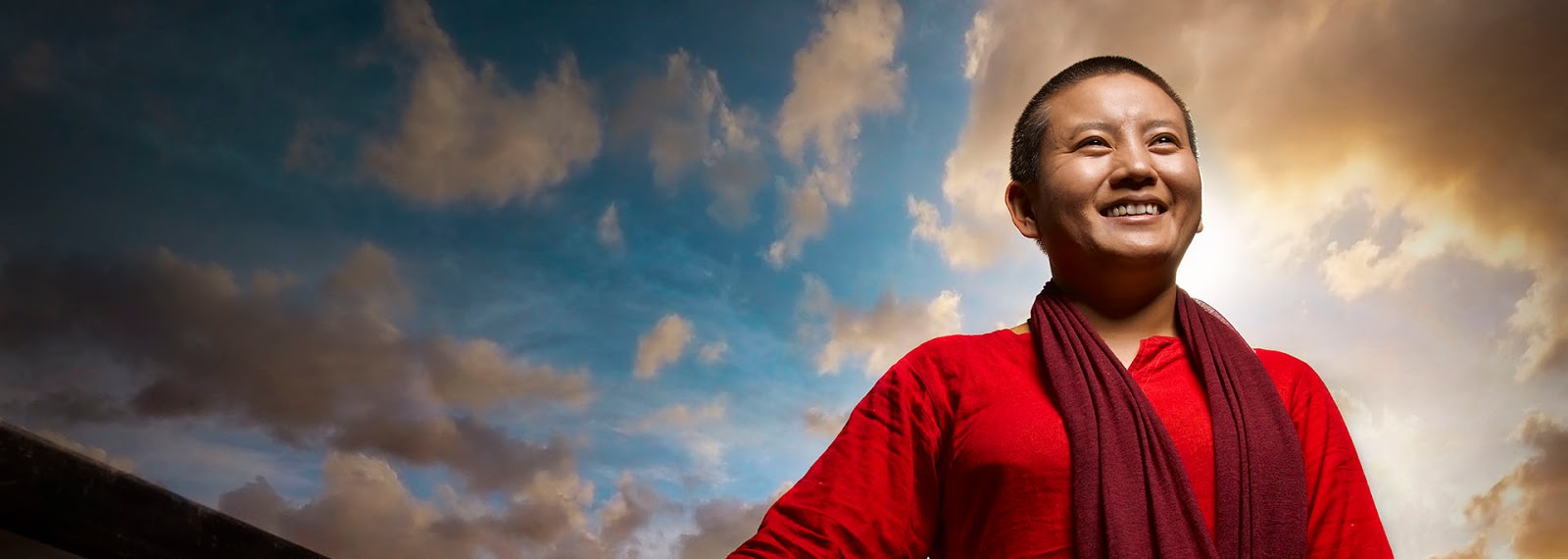
Tibetan Pop Star: Ani Choying Drolma


Ani Choying Drolma is supposedly the Tibetan pop star, according to Lion's Roar. Check her out on Spotify.


She has an awesome charity for nuns.

You can follow her on Facebook.

Saturday, December 24, 2016

Fire


Sangharakshita, in the meditation anthology, talks about saying "sit" instead of "meditation". His take was that sit is casual, where as meditation implies more the right effort involved. I thought that was interesting.

He also says when you're tired, you are in your lower nature. Better to take a nap than meditate.

I've been enjoying the novels of Haruki Murakami, which I feel has a Buddhist element to them.

PS--This is my most popular post by far in 2016.

Friday, December 23, 2016

Hannah, the movie

There aren't a whole lot of Buddhist movies that I know of. On Netflix now, Hannah is about Hannah Nydahl, a Danish woman who set up 550 centers for Kagyu Buddhism. Woof. She had a husband who seemed to support her as well. I hate to say this, but I'd never heard of her before. Quite inspiring. They had a cute marriage as well. Then there's the whole China/West split in the reincarnation of the Karmapa, one the Chinese recognize and one the West recognizes. Wikipedia has a page on the controversy. I think spiritual biographies can be difficult because you have to be part of the sangha to really appreciate it. 

The days are getting longer

In The Purpose and Practice of Meditation Sangharakshita suggests that 2 hours of meditation a day are the minimum. He's quite careful to say that's a rough guide and that there are many factors and you should consult with your spiritual friends. Even so, that's an interesting goal, to get up to 2 hours a day. The best I've done is 40 minutes every morning for quite a while. The goal he says is to get contact with the transcendental, the dhyanas.

He said he burnt his meditation journals, but that if you're not "too precious" they are good things to keep so that you can remember good experiences when you're down and other patterns. The Insight app has a journal in it. I switched to prompt journal when I'm done with meditation.

After the final bell rings, I review the hinderances and the 3 characteristics of existence.

.

Wednesday, December 21, 2016

Winter Solstice


Looking into the various pagan holidays, Saturnalia the master serves the slave. I don't really have any slaves, and I'm not sure who my masters are. I won't get into that. Yule you eat until the log burns out. That's not going to happen. The holidays celebrate the sun, and there's usually family gathering, gift giving. I wish I wasn't in the city, there could be a big bonfire.

If I was going to do a sacrifice, maybe I could go electronics free. That's not happening this year. Maybe throw away extra clothing and books and whatnot. Usually I call family on xmas, before my conversion from a nominal Christian/atheist, to Buddhism, so I can certainly call family today.

I did find a holiday in December in Thailand, where you do Tonglen at the full moon in December. Seems most Buddhist holidays are not in December. Although there are many different celebrations around the world.

The best thing would be to connect with sangha, meditate, talk, listen and read Dharma. Perhaps do a special puja that may not be unique but dedicated to winter solstice. I could not find a winter solstice Buddhist puja.

Anyway, amongst those who have set rituals I wish you a happy holiday.

Wednesday, December 14, 2016

Octavia Butler


Octavia Butler is my new favorite writer. I've read 9 of her books and I have 3 left. Her series' go from 4 books to 3 books to 2 books. The last one about the parables, the heroine develops a new religion which states, "God is change." Instead of enlightenment, she wants to get humans into outer space. The two books equal about the most bleak dystopian novels I've ever read, but I found it interesting that she chose impermanence as her god. I couldn't recommend her more highly.

Life 2007-2009

This TV show has a main character that is influenced by what seems to be Zen. He's in the moment. He listens to tapes. It gave him something to read while he was in prison. He was wrongfully convicted and returning to being a detective, he is also very wealthy from the mistake the state made. He hired a friend from jail to be his financial advisor. His partner is a beautiful woman of middle east origin and the captain ends up being from New York. Usual cop drama. They talk about competing theories of murder and work to test their hypothesis. Somewhere towards the end, questioning someone leads to a confession.

There's not much to say except that Buddhism is becoming a part of main stream culture. Supposedly the show is filmed in New Orleans, but the show is set in LA. The west coast is more influenced by Zen than the east coast, but there's a lot of Zen out here too.


Monday, October 17, 2016

With Mindfulness, strive on

In college, many moons ago, I was in an aesthetics class. I read Arthur Danto's book The State of Art. Aside from the Tilted Arc stuff, there was the argument that we are at the end of art, that all the major schools have been created, we're just playing around with what's been created. Indeed Danto's next book is After The End of Art.

As I was chanting from the TBC Puja, which I have modified in by adding in things. I've added conciliation and atonement. Instead of chanting to Padmasambhava twice, I chant pratityasamitpada:

Imasmim sati, idam hoti.
Imass’ uppādā, idam uppajjati.
Imasmim asati, idam na hoti.
Imassa nirodhā, idham nirujjhati.

I learned to chant that 8 years ago, my how time flies.

Amongst the mantras I add in a Milarepa mantra:


The TBC is an ecumenical order, which means inclusive of all the sects. So I can read pure land sutras, I can read it all. I've been into the Teravadan books from Amaravati. I feel like I could hang out with any sect and get something from it. In a way, I feel Buddhism, like art, is at an end. You've all these kinds and really you can mash up what ever you want. Of course it's good to get an order and a sangha and a program of progress to have regular steps instead of irregular steps. Even Batchelor writes a book called After Buddhism. Some people want an American Buddhism. It's hard to imagine what that would mean. There is a movement to take Buddhism away from the secretive teachers, an open source Buddhism. Sangharakshita talks about spiritual indigestion, too many rich doctrines.

Like everything, you can never give up your will, negotiating your own spiritual shoals is all your business and nobody else's. The fight against ossifying orders, keeping the spiritual life alive can be challenging at times. With mindfulness, strive on!


Saturday, October 01, 2016

Higher Power

So my partner had some time to blog, so I'm inspired to blog.

Chapter 4 in The Philosophical Baby talks a lot about Buddhism and consciousness. Gopnik suggests that because babies are experiencing everything as new, they are more conscious. They need more anesthetic for surgery. In a way they are little Buddhas. I have treated my little sprog as my teacher, just as their brothers are my teachers as well.


For that matter my daughter's mother has positivity, energy, patience, wisdom and kindness oozing out her every pore, and she teaches me quite a lot. Sometimes family life is your sangha.

Been reading The Buddha In Me, The Buddha In You. It's a positive encouraging book by a life coach who also follows Soka Gakkai.

I stopped reading The collected works of Ajhan Chah, because it seems to be an elaboration of just do it. I've gotten a lot from what I've read so far, but I've stalled in the book because he says put down the book and go meditate. Good advice. Great teachers always point away from their talks and books and suggest meditation. I'll get back to it eventually. I put down a lot of books and come back to them when the spirit moves me.

I've been reading One Breath At A Time for the third time and finding it rewarding. I'm still stuck on the whole higher power thing.