Tuesday, July 25, 2023

Ooku by Fumi Yoshinaga

I know just mentioning Buddhism in a works of art, will hardly lead one to enlightenment, but still it's rare enough in English for me to get a wee bit excited. Counterfactual history from 1603 and 1867, the Edo Period in Japan.


Ooku is a Netflix show, and graphic novel by Fumi Yoshinaga. The premise is that there's an illness that wipes out the male population and with so few men, the dynamics change. Women take over and are even the shoguns. The shogun has a harem of men. 

In the above panel, before he goes off to live in the harem, he is kind to sleep with women who want children. He has a female friend who discusses it with him. Some men charge for such an activity, but he takes all comers for free. He's conflated his kindness to a transcendence. His friend sees through this, but is also a bit harsh. 

I like the self serving aspect to it, and the harsh judgment. I love the commentary "BAZONK". A satyr is a sylvan (forest) deity in Greek mythology having certain characteristics of a horse or goat and fond of Dionysian revelry. Dionysus is the god of wine-making, orchards and fruit, vegetation, fertility, festivity, insanity, ritual madness, religious ecstasy, and theatre.

In Buddhism you move away from rushing towards pleasure, and fleeing pain through development, and insight into conditionality. 

The teachings are developed and corrupted. The Buddha said it was better to stick your dick in a snake's mouth than in a woman. Then later in Mahayana it's a Bodhisattva who will sleep with an ugly woman they're not attracted to. It might not be literal, that's the weird thing about spiritual writing, it's all about attitudes, and not actual concrete suggestions. 

Triratna is a Buddhist movement without a lineage, started in 1967 by an Englishman with the ordained name of Sangharakshita, that is neither monastic nor lay, transcending that duality. Many order members are married or in relationships. In the swinging 70's it was perhaps just against harming people, and shucking off Christian prudery and negativity about homosexuality. 

In Transcendentalism there were a few people who we don't know much about their sexual lives, and that has led to speculation that they were gay. Thoreau's sexual life is unknown. He was rhapsodic about young male friendship, and that could be gayness leaking out or it could just be wholesome friendships. Alcott is unknown, people guess that she was gay. Whitman was openly gay. Dickinson gets a new ahistorical show that makes her in love with her brother's wife.

Sex and the Spiritual Teacher by Scott Edelstein is a good book to read about sexual misconduct in the spiritual community. Never do anything that you don't want to, and don't imagine a spiritual guru is going to help you with your genitals.

The above is why some people say only trust Theravada monks, though there are many Theravada sex scandals as well, so it's not a guarantee.

In Star Wars, Anniken is in Jedi training, and they are basically Samurai, and that is based on Zen, which doesn't have chastity always, but Anniken isn't supposed to get married, and he does.  

John Stevens writes Lust For Enlightenment, which is about sexuality in the Zen tradition. I reviewed an advanced copy of some erotica he wrote, and it seems to be pulled from the market because his Wikipedia page doesn't list it amongst his publications and the widget I put up with a photo of the book is gone. I found my advanced copy of Tantra of the Tachikawa Ryu.

I am fragile, my mating mind burns a lot of energy, no matter how much I try to focus on my body, feelings, thoughts and the Dharma. I have made mistakes, sexual misconduct, that I'm utterly ashamed of, very sorry for the pain I caused, and it has hijacked my spiritual life. Full disclosure, I'm not moralizing from up on high, I'm saying I've made these mistakes, and indeed there is a history of it in many people's lives, and in Triratna, and in Buddhism in general. There are the ideals and there's what people do. I don't think the ideals are harmed by messy humans. I don't think we need to get rid of the ideals even if people fall short. I can still aim for them even if I've fallen short in the past.

With simplicity, stillness and contentment I purify my body.


I'm only on the first graphic novel, but later in the show no Netflix, there's a monk who's forced to have sex or someone will be murdered. That's pretty intense choice.


Tuesday, July 04, 2023

168th Anniversary of publication of Leaves of Grass

 “I accept Time absolutely.

It alone is without flaw,

It alone rounds and completes all,

That mystic baffling wonder.”


“I celebrate myself, and sing myself,

And what I assume you shall assume,

For every atom belonging to me as good belongs to you.”


“Stranger, if you passing meet me and desire to speak to me, why should you not speak to me?

And why should I not speak to you?”


“This is thy hour O Soul, thy free flight into the wordless,

Away from books, away from art, the day erased, the lesson done,

Thee fully forth emerging, silent, gazing, pondering the themes thou lovest best.

Night, sleep, and the stars.”


“I will sleep no more but arise, You oceans that have been calm within me! how I feel you, fathomless, stirring, preparing unprecedented waves and storms.”


“I am large, I contain multitudes”


“Do anything, but let it produce joy.”

Monday, July 03, 2023

Kobat-Zinn’s appreciation


About Analayo: “ his emphasis on gentleness and non-striving and openness, rather than contracting around any one view or teaching. Rather than striving to “attain” what is being pointed to and invited in a particular practice, his emphasis is always on recognizing that quality’s inherent presence. Whether it is breathing in or breathing out experiencing joy, or happiness, or impermanence, dispassion, cessation, or letting go, we simply invite that quality to manifest on its own as we attend to the inbreath and to the out-breath, and to the pauses between them.”

-From the Intro to Analayo's Mindfulness of Breathing (2019).

Saturday, July 01, 2023

gobbledygook of my own making


Through the magic of technology, I'm meditating with a master. It's amazing. I'm so grateful. I hear birds in England and birds in New York City. 

I feel so lucky to have stumbled upon an online retreat. I met him in person probably 15 years ago. He's probably not taken u turns like I have, and just keeps developing. My spiritual life was 10 years of deepening, and then a 10 year detour. I'm hoping to coming back. I try to gently let go of that story and inhabit the breath. 

The usual feeling of my head coming out of warp speed when I start to meditate a lot. There's so much mental chatter. Coming into the body and I can't help but cry and cry. I have made mistakes I deeply regret, and struggle to forgive myself. I forgive myself for punishing myself. I don't know how to right wrongs of the past, the harm I've done. Forgive, forgive. Inside not forgiving is impatience and unrealistic expectations, not accepting conditions, resisting reality. I feel heat, like I'm burning off impurities. 

Out on my mindful walk, I have a brief flash of nausea from the coffee I gulped. That's the story I tell, and I'm painfully aware of how important it is for me to tell a story. Keep wanting to remember things to write about and blog, because when I actually sit down to do it, I panic that nothing is going to come sometimes. Obviously something comes, too much, this blog is just mental chatter. The culture around Buddhism has some interest. Everyone should express their insights, and then we could put it all into an AI and we could have an interesting artificial intelligence. 

No need to force anything. I want to add the word naturally because I think that word cuts through a lot of metaphysical gobbledygook I've inherited in the USA, that's too abstract, there's more recent clutter of my own making. America were founded by religious zealots. Vigor in the spiritual life is important, but there are a lot of New England horror stories. In a way Poe, the biggest critic of Transcendentalism, expresses that horror. Concord Transcendentalism is quite hard to read, but I really like ending up with naturalists cutting through Puritan excesses. Go for a walk. The brief pink sky as the sun rises. 

Where is the breath? Soothing the body. Nothing to exclude. Aware of the conditions of the body. Sensitive to delight. Train myself to calm mental fabrications. They calm naturally. Relax.

Seeing restlessness as a hindrance makes me want to do something about it, but seeing calming, I just relax in seeing restlessness decrease a little bit. Patience. Training. 

I feel gratitude. 

You can watch the meditation lead through on Vimeo. Second sit Vimeo.

Kamalashila's website


Wednesday, June 28, 2023

Recognizing a Buddha

I was reading The Life of the Buddha by Bhikkhu Nanamoli this morning. It's a collection of Pali Canon. The Pali Canon are the memorized memories of the monks that are passed down, from when they wrote down when writing became a thing. Writing wasn't really a thing when the Buddha was alive, so the tradition was saved by monks who memorized things by chanting together. It's really amazing that these writings survive, and that I can read a translation in English of something so long ago.

To me they are endlessly fascinating, like this morning when I read that the monks mistook Nanda, the Buddha's cousin, for the Buddha, and they were kind of irked by that, and even went so far as to make a rule about the size of his robe, so they wouldn't make that mistake again.

There's a lot of writing about how you know someone is a Buddha by looks. My daughter asked why my Buddha statue has such long earlobes. I told her that's how the iconography grew up around what an enlightened being looks like, including that bump on the top of his head. She thought it was just a bun, hair tied up into a bun. 

At the end of each section, Nanamoli writes where he got the information. When you look it up in the more popular references, they are easy to find. The Majjhima Nikāya is probably the most popular big book of the Pali Canon. The Dhamapada, and the Udana are short collections. There are 4 main big books from the sutra collection. The bit about monks getting annoyed that Nanda looked like the Buddha and they got all respectful and ceremonial over the wrong guy, and got annoyed that that. That's from the Vinaya, which are the rules for the monk. 

In a way I feel like they made a rule for everything. Whether you can leave your bowl of water after going to the bathroom is a big bone of contention, and the Buddha is even told to go away when they went to expel a monk for leaving the bowl of water at the latrine. People like to make rules for other and it can be used as a way to express conflict with others. So and so broke a rule, therefore they don't really want to participate in our community. Leaving a bowl unmindfully shows perhaps an unconscious wish to provoke such rule riddled communities. That they told the Buddha to go away, he didn't know enough about the community is utterly fascinating. You can reject the Buddha's advice. 


There was a time in the Triratna when they had a very vibrant arts center in Croydon, but people would disappear in the night because the pressure was just too much. Sangharakshita would go down and try to counsel the leaders, but in the end they had to resign because they'd gone off the rails. Sometimes trying really hard to be good can lead you towards cultic behavior. To outsiders intense spiritual communities can seem cultic. 

Some of the rules seem mistaken in the Theravada community, like a monk can't help his elderly aunt by touching her even if it's to help her out of a car or down some stairs. There is a parables about touching a woman to help them across a river on a monk's back, and a strict rule follower rebuking the rule breaker. The rule breaker jokes, I left that woman back at the river, you're still carrying her. This quip signals a tradition of brushing aide such pettifoggery. And yet it was the fusty traditionalists who preserved the writings and in a way are the center of Buddhism coming down to these times. The Mahayana and Vajrayana developments in Buddhism are perhaps contained in the early teachings and are emphasis that evolve to meet a changing world. Excessive individualism lead to a push for altruism. The loss of traditional relationships led to an emphasis on the guru.  

The world we live in would be unrecognizable to the Buddha. As we round onto 8 billion people, the technology, the pollution and crowding, the amount of sources competing for our entertainment, the complex entertainment of science fiction, fantasy, drama, romance. Music has had an explosion of styles from punk to hip hop to jazz. There are a million little niches of music, folk music that develops like klezmer and zydeco, from Ska to trap music. There are stunningly unique talents like Charlie Parker to Emahoy Tsegué-Maryam Guèbrou, Philip Glass to Bill Evans. If the Buddha didn't dismiss Thomas Pynchon as a distraction, could he track down all the obscure references and read this incredibly dense and complicated novel? 

It is possible that entertainment is a distraction, but I can't help but feel beauty is an important aspect of the spiritual life, and modern sophisticated aesthetic appreciation is something our overclocked mating minds need.

There also seems to be come danger in avoiding the modern world in a Neo-Luddite move. Native Americans were just steamrolled by technology and population into little ghettos in America. 

People ask what you would do if you were Ukrainian and a Buddhist. Ukraine is subject to a naked aggression takeover by the larger Russia, attempting to regain it's former glory of the Soviet Union. My answer is I think a Buddhist would go out into nature and mediate. But there is an argument for fighting injustice and affirming the very existence of your society by forces seeking to destroy it. This aggression will not stand says Lebowski in his bath robe, drinking a white Russian.

The engaged Buddhism, and effective altruism movements have given a voice to using technology and public opinion for good. From hospice movement to fighting extreme poverty. There are dangers of repeating the colonial technique of colonizing people's by replacing their spirituality as well, but the kindness of helping others transcends particular religions and sects, and most people prefer help even if they have to listen to a sales pitch. 

There is almost a political fight about whether we have to grow up and evolve or if we can be as selfish as we want to be. As all voices are allowed to speak, the leader's voice is also challenged, and people shop the political marketplace the find what feels right for them. 

Henry David Thoreau was skeptical about large interventions in society, he though we needed to fix ourselves first. I think we can do both, but the thing we can most influence is our own self evolution, which in the end is just to overcome yourself to help others. 

Focusing on whether you can distinguish a Buddha seems like a question that has passed us by. Every once in a while people ask on social media if we would be able to recognize a Buddha, but since the traditional answers with bumps on the head and long ear lobes doesn't really feel like the right way to go about things. Not over saucing and not bumping your ankles just points to a quality of mindfulness, not necessarily specific. 

Society often focuses on invisible minorities, encouraging empathy and understanding for different sexuality, or even ethnicities that can blend in mainstream society. Growing up in Wisconsin the Jewish kids blended, I wouldn't even find out that people were Jewish until we started talking about these things in high school. I was so surprised this one young woman would only marry another Jewish person, I didn't even know that existed, and my stepfather was Jewish. Living in Kew Garden Hills more orthodox Jewish people wear unique clothing that clearly distinguishes them. 

When I was a psychotherapist, a mother wanted help with the fact that her son had a non-Jewish girlfriend. Immigrants move to America and their ways are lost in the tide of American culture. Their grandchildren would barely know their ways. I never met my German great grandmother, though she lives fondly in my mother's memory. I've never been passed to my knowledge any German culture through my mother, though she might not even know, and I might not even know. Human life spans are too short, people are so pragmatic, but in my lifetime I've come to really value culture. I don't know what to do on Vesak day except try to be extra Buddhist. Yes, I've gathered with other Buddhist while they performed Japanese calligraphy or Sri Lankan children's passion plays. American culture might be watching a football game, drinking a beer and eating grilled foods. 

I met a Iranian diplomat son who was in a punk band, opened for the Ramons and Iggy Pop. I met a Gujarati woman who would spend hours in a mulberry tree like I did in Wisconsin. 

That brings up the question of what culture do we want in America, and as an American Buddhist. Essential Buddhism will have a cultural element to it, even if it's openness to culture. I could let go my sports viewing, but it was really meaningful for me to watch NYCFC win the MLS Cup with my son. There's a Buddhist movie about the monumental efforts monks made to get a TV so they could watch the World Cup final. See, that's how humans can be. I could give up BBQs, but I'm really touched when someone buys veggie burgers to care for my vegetarianism, veganism and plant based diet. I like gathering. 

Every day is Vesak day, as I push myself to study, commune, meditate, vigilance with ethics and devotion. I really like candle balloons and other traditions from traditional Buddhist countries that burst on the scene. Traditional Buddhist cultures might shunt the spiritual life off into the monks, and just consult monks when they are having troubles, but Buddhism permeates society, the culture supports the specific spirituality. 

Never mind the heresy trials in Burma and the Buddhist fascist nationalists who seek to purify a country, as a means to gaining power, just the way Trump held up a Bible, and seems to represent the opposite of everything in it. How are humans so easily duped?

Secular Buddhists are seen to be just extracting the good bits of Buddhism from traditional cultures, the way colonialists extract minerals from the earth and take them away. I don't have any solution for that beyond trying to be maximally aware of your motivation and hearing alternate viewpoints. The racism in American society is rather hard to listen to when it's explored in modern American Buddhism, but I'm sure it's there, and even if narratives strike me as somehow off, there's enough computer memory to save expression of people's experience. 

We are exposed to different perspectives in a way my great grandfather wasn't exposed to. You could live your life without worrying too much about understanding others perspectives, or the history of the world. You just worked your job, came home and lived with your family. There was not too much diversity in the past because diversity wasn't expressed in mainstream media. 

Representation became important as there were more and more channels on TV, social media, the world wide web. I'm expressing myself to the world when I publish this blog. In the past, I would write a letter to a relative or a friend, and I would never express this because all my relatives were Christian and I didn't have Buddhist friends until relatively recently, not even half my life. 

People can now gather for good or ill, just as always, but it's easier to organize yourself by predilections or preferences. The people who worry about the fate of white protestant Christians can gather now and feel embattled as the world expresses it's difference. 

I am often impressed by the integrity of non-Buddhists, appreciate how deliberate people structure their lives, and focus their attention. Sometimes I don't know how to talk to people who see themselves as Buddhist, there is a barrier of language, culture that are often hard to surmount, or traditional personalities which are fairly reserved.

The secular Buddhism isn't felt fervently in a way that will preserve it, I fear, traditionalism has that extra thing in it to preserve a culture against the onslaught of changing times and outside influences.

I don't know if "how do you recognize a Buddha?" is an important question, but I think when I get to know people I see their spiritual intensity, and my own flawed subjectivity could be wrong, even if it's well trained in some ways. My respect in a way doesn't really matter. 

To get ordained in the Triratna Buddhist community you just have to convince a few order members, but they don't have any official guidelines because then people would just ape the things to get ordained. 

There are many people who don't see Triratna as having a lineage, and there are people that don't see it as even Buddhism. That's perhaps a sectarian gatekeeping, but what if it's not? Time will tell. 

People want to be recognized in the spiritual life, that feels good. I sometimes think we all want to be hyper praised like a toddler learning to walk, you hear the genuine enthusiasm of parents in a way you never hear it again. Do we try to overcome our kink for praise? Maybe some have matured past that to present as not really wanting that. There's a long list of things to overcome and evolve away from through community, meditation, ethics, devotion and study. Recognizing others is part of the spiritual life.

When the Buddha was first enlightened he ran into a fellow who thought the Buddha had something but went away muttering, "maybe so,". He met some businessmen who took refuge in the Buddha and Dharma, but there was no Sangha yet. It wasn't until he found his 5 ascetic friends that he achieved proof of concept, that Buddhism could be transmuted from one person to another. The wheel of the Dharma began to turn. Even though most people won't get Buddhism in it's depth and breadth, he tried anyway. You see teachers today, they're trying to teach, but they'll admit they aren't enlightened, or the tradition is to pretend they are because it's useful for you, not a statement of attainment. 

What if you could treat others as profoundly intimate, friendly, empathetically, understanding? That is what that teaching leads me to consider. 


Some friends grief at the death of the Buddha:

Wednesday, June 21, 2023

William Ellery Channing Poem

 My Symphony

To live content with small means.
To seek elegance rather than luxury,
    and refinement rather than fashion.
To be worthy not respectable,
    and wealthy not rich.
To study hard, think quietly, talk gently,
    act frankly, to listen to stars, birds, babes,
    and sages with open heart, to bear all cheerfully,
    do all bravely, await occasions, hurry never.
In a word, to let the spiritual,
    unbidden and unconscious,
    grow up through the common.
This is to be my symphony.

Thursday, June 15, 2023

More evidence that I'm not enlightened.

"He adds sauce in the right proportions." (p. 191, Nanamoli). I put too much BBQ sauce on my potato medley the other day, another reason I know I'm not enlightened. There's a quality of mindfulness, I need to train more.


In other news Vishvapani Blomfield writes about Suella Braverman in Tricycle, here are some interesting quotes, probably better to just read the article yourself, but I like to quote things:

"Braverman’s politics could hardly be further from my own, which are the usual leftish-greenish mix that most people expect Buddhists to hold in Western countries. Her meteoric rise through British politics has made me question my assumptions about how Buddhists should regard politics—the need to tolerate others’ viewpoints and the importance of holding one’s own beliefs lightly. But her enthusiastic engagement in the culture wars has also helped me clarify the limits of that tolerance."

"I found her charming, intelligent, and evidently sincere in her Buddhist practice. Some years before, she had become a mitra (meaning “friend”) at Triratna’s London Buddhist Centre, and at one stage, she asked to join the Triratna Buddhist Order, of which I’m a member. Ordination is a much bigger commitment, and, though she later withdrew her request, doing so showed her seriousness. "

"I knew that she probably found herself out of step, politically, with many of her Buddhist peers in settings like Triratna study groups, and I admired her for sticking around."

"I don’t buy the idea that Buddhists should necessarily skew left. The Buddha wasn’t a Democrat, and he may not even have been a democrat: his teachings just aren’t about that."

"But being tolerant doesn’t mean you stop thinking critically, and Braverman’s politics is hard for someone like me to accommodate. She opposed compromise with the EU to reach a trade agreement after Brexit; she is seeking the toughest ways to deter the refugees who travel to the UK across the Channel in small boats, including the flights to Rwanda; she opposes the agreement that offers a solution to Northern Ireland’s problematic status post-Brexit; she wants the UK to withdraw from the European Convention on Human Rights; and she demands that teachers don’t “pander” to trans pupils."

"Buddhist teachings are typically expressed in universal terms, and translating them into politics involves a long chain of reasoning, at every point of which we make interpretations. As Buddhist psychology tells us, these interpretations are influenced by our past, preferences, allegiances, and a host of other subjective, emotionally loaded factors."

"He says in the Brahmajala Sutta, his magisterial analysis of ‘views,’ that even the most impressive-sounding beliefs at root are expressions of ‘the agitation and vacillation of those who are immersed in craving.’ Practicing Buddhism should therefore mean questioning our views about things like politics. I notice in myself an impulse to believe that what I think is correct, simply because it’s what I think, and I try to recognize how that feeling shuts down my curiosity and stops me listening."

"The more insecure and defensive we feel, the more tightly we cling to our beliefs and the more estranged we feel from those who disagree with us. The result—in the words of the Buddha in the Madhupindika Sutta, is “taking up rods and bladed weapons, arguments, quarrels, disputes, accusations, divisive tale-bearing and false speech.”"

"the four speech precepts challenge the assumption that our speech is justified if we think it’s true. It also needs to be kind, helpful, and conducive to harmony."

"In politics, when we say that a message “fires up the base,” what we really mean is that it affirms certain emotions and encourages people to identify with a particular view of the world, regardless of whether it’s based in reality. That applies whether the base is on the left or the right, and it’s relevant to left-wing rhetoric that’s fueled by anger, if that overwhelms our capacity to listen to our opponents."

"I’m not questioning the sincerity of her Buddhism, it’s very hard to detect any Buddhist difference in the way she does politics."

"...what I see is someone throwing fuel on the fire when I think we should be dousing the flames."

"...politics may be an impossible field for anyone who wants to live fully in accord with Buddhism. At the same time, for better or worse, it is also the realm in which a certain kind of highly consequential change is made. Can Buddhists afford not to engage?"

Tricycle


I'm not going to lie, I've gotten caught up in politics. The clarity of this article is refreshing. 


11/10/23:

There's a Mirror article today that gives information on Suella Braverman (Wikipedia). Her maiden name was Fernandes.

She is interesting because she's a Buddhist in a Triratna community and a right wing political hack. 

She has said "being homeless was a lifestyle choice." She is against Transgender people (second source).

Her father is from Kenya and her mother is from Mauritania. She was named after Sue-Ellen from the show Dallas. Her teachers convinced her to change her name to "Suella". 

Her husband Rael Braverman is Jewish. He works at Mercedes-Benz. They married in 2018. They have two children together around age 2 and 4. She is 43 years old.

I've read Vishvapani's essay about some of the damage some of her rhetoric would do, and that that is not a Buddhist thing to do. It's a very reasonable essay, and really bends over backwards to give her the benefit of the doubt, and does not assume just because she's right wing that she's necessarily wrong. It seems like a pretty fair article. The upshot is that some of her language seems harmful and therefore hard to see the genuine Buddhist source. 

Right wing or left wing, I don't think being right wing disqualifies you from being a Buddhist. In fact quite a lot of Buddhists are right wing. Sangharakshita voted for Thatcher, and I'm pretty sure others are right wing. 

About half my friends who were right wing are still my friends even after the Trump years. I seek to understand and appreciate the limits of my perspective. I don't think one human contains all the truths and political leaning is a abstract hedge, and each case can be looked at individually. 

I personally feel that government should ameliorate systematic problems that harm people, and modify capitalism, redistribute wealth and do things for the common good like roads and garbage removal. 

My left wing bias makes mask refusal and politicizing vaccines seem murderous to me. Perhaps it's a metaphysic and not an obvious truth to everyone. I struggle to keep an open mind about how murderous I see right wing thinking, and how harmful I find their rhetoric. How deceptive their rhetoric is. 

I'm very concerned about the swing right in terms of political power. In terms of lying, moneyed interests, gerrymandering and fascist rhetoric.


11/13/23. Braverman is fired from being home secretary for criticizing police. (NY Times) "Ms. Braverman had long been a divisive figure at the heart of the governing Conservative Party, whose provocative rhetoric won her support on the hard right while alienating more moderate colleagues."


11/20. Quite a letter to the editor about Braverman:

"If the use of a tent by a homeless person is as our Home Secretary says ‘a lifestyle choice’, then perhaps being a Tory MP with little or no compassion might be one as well? 

The Home Secretary is a member of the Triratna Buddhist Community, and may need a gentle reminder from her fellow Buddhists what the Buddha taught about compassion. 

Two quotes spring to mind: “Have compassion for all beings, rich and poor alike; each has their suffering. Some suffer too much, others too little.” And “Teach this triple truth to all: A generous heart, kind speech, and a life of service and compassion are the things which renew humanity.” 

Given what the Buddha said, I am left wondering if perhaps hypocrisy itself is yet another lifestyle choice?"


11/23. Suella Braverman hits out after record migration figures (BBC). I think it's interesting to have a female child of immigrants saying England is getting too many immigrants. Usually women are warm and understanding but she's a hard line right winger who has incendiary rhetoric. I don't think she went to Buddhism for the Jedi path, I think she's a Sith. 

Thursday, May 25, 2023

joie de vivre

That science is supplanting some of the space mythology had is OK. We can look at the cosmic perspective in Buddhist mythology with great time spans like mahakalpa, or imagine living lives and lives, billions of being inhabiting limitless space. So many exotic creatures. You can look at pictures of space that are coming out, and think about the Mastodon living 10,000 years ago, then going extinct. Buddhism can have garuda, science can have tartagraves and axolotls. The age of information has shown us elaborate mythologies, and elaborate wildlife, helped us gaze into each other deeply and deep deep into outer space.

The upshot is life is short and you're puny in the scheme of things, and your best shot, in the Buddhist plug is to work the program of meditation, sangha, ethics, study, community and devotion. We see other solutions. There's the Hollywood star, rock stars. They often lead tragic lives of excess. We see oddballs who bomb buildings and create manifestos. The millions of people who go to work and don't cause a problem are not newsworthy, so our information distorts how much weirdness there is in the world, but does expose our need for weirdness and challenges.

You can delve into self help and maximize your potential, live your best life. Tara can help you remove the obstacles. You can study the great western philosophers and eastern philosophers. It's no shortcut as Godel proved, but is another tool in the toolbox. Psychology is more descriptive than unlocking the mysteries, but is another tool in the toolbox. You can discuss ethics. There have been a lot of amazing articulations, the idea of justice by John Rawls, the newly articulated effective altruism, which might just be slick fund raising.

There were early vegans, Amos Alcott was one in Transcendental Concord, who ate potatoes and apple sauce on his journey to England. The uncovering of the cruelty towards animals has been well documented, and it goes beyond slaughter to practices to acquire milk that aren't so nice. Peter Singer has a new essay in the Atlantic. In the past 10 years I've seen an explosion of products and a retrenching by food industries who seem to put milk or eggs into everything. There's a certain amount of corporate gaslighting to try and shake the resolve of virtue.

The amount of novels that describe possibilities, movies, music, the explosion of art after we've taken care of the material needs.

For me it's hard to know what traditionalist Buddhist are insisting on when they embrace early Buddhist mythology, but I do love mythology and what it says about us, the reflection in the mirror. Our society is undergoing great technological change and we need resources to cope and maintain our humanity. 

I am getting intoxicated by technology. One prominent traditionalist complains that he's been banned and doesn't really have insight into how his non inclusive and judgemental writings impact others. Nobody contains all the truths, so it's natural for me to fear that I'm the asshole in the room. I'm getting more and more comfortable presenting myself as not omniscient. The desire to dominate and be dominated is gradually loosed for a more collaborative and democratic way of being. 

Politics is a great exercise in filtering out what isn't important and focusing on your vision, and accepting you can't always win. It's like following a soccer team, there is no team that always wins, no matter how dominant teams are. As the world sport, I use it to learn geography. I was just reading about the Brazilian religion of Umbanda, which has secretized with Christianity. I've been fantasizing about Buddhist mythology syncretized with American folklore. Is Paul Bunyan Maitreya with his big ax? Is the blue ox academia?

From tortoise poking their head above water to listen to chanting on the lake, to the carp that scare me as they thrash about in the reeds, underwater of unconsciousness, to the various birds fluttering by above me, I don't know. I profoundly don't know, and am not in control of myself, and seek to connect with others.

The Buddha speaks:

“Mendicants, don’t fear good deeds. For ‘good deeds’ is a term for happiness, for what is likable, desirable, and agreeable. I recall undergoing for a long time the likable, desirable, and agreeable results of good deeds performed over a long time. As a result, for seven eons of the cosmos contracting and expanding I didn’t return to this world again. As the eon contracted I went to the realm of streaming radiance. As it expanded I was reborn in an empty mansion of Brahmā."

In one of his lifetimes he spent 7 years on metta. 


Saturday, May 20, 2023

Brandi M. Carlile / Phillip John Hanseroth / Timothy Jay Hanseroth

…Hang on, just hang on for a minute
I've got something to say
I'm not asking you to move on or forget it
But these are better days
To be wrong all along and admit it
Is not amazing grace
But to be loved like a song you remember
Even when you've changed
… Tell me
Did I go on a tangent?
Did I lie through my teeth?
Did I cause you to stumble on your feet?
Did I bring shame on my family?
Did it show when I was weak?
Whatever you see, that wasn't me
That wasn't me, oh, that wasn't me
… When you're lost you will toss
Every lucky coin you'll ever trust
And you'll hide from your god
Like He ever turns his back on us
Then you'll fall all the way to the bottom
And land on your own knife
And you'll learn who you are
Even if it doesn't take your life
… Tell me
Did I go on a tangent?
Did I lie through my teeth?
Did I cause you to stumble on your feet?
Did I bring shame on my family?
Did it show when I was weak?
Whatever you see, that wasn't me
That wasn't me, oh, that wasn't me
… But I want you to know that you'll never be alone
I wanna believe
… Do I make myself a blessing to everyone I meet
When you fall I will get you on your feet
Do I spend time with my family?
Did it show when I was weak?
When that's what you see, that will be me
That will be me, that will be me
That will be me


This song by Brandi Carlile et al expresses to me the perfect sense of remorse, and how you don't see yourself as your mistakes. 

Wednesday, May 10, 2023

Yan Lianke novel quotes

“The fact that Yahui, an eighteen-year-old "jade nun," would soon become the object of the Daist Mingzheng's love was something neither the school's religious masters nor the deities themselves possibly could have anticipated. Yet Yahui didn't even feel this was love. Instead, she simply regarded it as the kind of secular attachment her religious mentor, or shifu, had once mentioned- like the mud that sticks to your shoes on a rainy day.” P. 17 Heart Sutra: A Novel by Yan Lianke


P.41 “ The Buddhist classes' gentle and secular attitude, the Daoist classes' pride and worldliness, the Islamic classes' egotism and competitiveness, and the Catholic and Protestant classes' emphasis on harmonious mediation, combined with their apparent unity in public but fierce rivalry in private-these all collectively represented the character and temperament of China's five great religions, the same way that a variety of fruits and leaves might represent a vast forest.”


Links:

I'm surprised Buddhist Fiction Blog doesn't have a review, though maybe since this is a satire about all religions in China, maybe it's not seen as Buddhist fiction. Nor does the website have a search feature on it's blog. Maybe the book is too interdenominational, it set in a state college where the 5 major religions of China study together. 

Yan Lianke’s Forbidden Satires of China (New Yorker). Fascinating article that mentions Wu Zetian, the only female emperor in China, who was from the 7th century. She used the Great Cloud Sutra to legitimize her reign, using a Buddhist sutra to prove she was the divine ruler. She claimed to be a manifestation of Maitreya and Vairocana, and devi of pure radiance referred to in the Great Cloud Sutra. 

"Yan is routinely referred to as China’s most controversial novelist, thanks to his scandalous satires about the brutalities of its Communist past and the moral nullity of its market-driven transformation." 

He has 17 novels and while unofficially banned in China, he sells well outside China.

"Yan’s style is experimental and surreal, and he is credited with developing a strain of absurdism that he terms “mythorealism.” As he puts it, “The reality of China is so outrageous that it defies belief and renders realism inert.”"

"...a world of remorseless venality—of corrupt local officials, amoral entrepreneurs, and peasants with get-rich-quick schemes that prey on desperation and run on an engine of betrayal."

Friday, May 05, 2023

Vesak Day


Vesak Day is May 5th. I'm focused on not forcing myself to feel a certain way, but this is the day to let joyful emotions loose that I actually feel about the three jewels. The way I feel when my team scores a goal. Have you noticed how you're allowed to go berserk when your team scores?! That's the outlet. Today is a day to let that Dharma love out. 

Listen to a Dharma talk. I happened across a Dharma talk from Sravasti Abbey. It was live, not sure if they save it and rebroadcast it. Was a pretty good talk by Thubten Chodron on the Bodhicaryāvatāra. I think rebirth is a cosmic way of trying to provoke people to look at the bigger picture. So much insight and cutting into the self defeating ways. 

The highlight of my life was being intimate with a sangha. I get really excited talking and reading the Dharma. I have the faith that the Buddha really was onto something. 

May all beings be happy. May all beings be well. I was reading about how Erasmus was named after a saint who really encouraged intercession, the praying for other people, and I immediately recognized that as what metta is all about, wishing others well. It's a glorious patch to combat the virus of selfishness. Many of my friends are far away or even dead, but I keep meeting new friends, and the circle around me is one I can cherish. I really do feel like gushing about how lucky I've been despite my mistakes and adversity. 

There's a spiteful part of myself that grubs about how Christianity, Islam and Judaism all get holidays in NYC. I want Vesak to be a day off from school, parking rules not in effect. NYC is pretty multicultural, people are surprised there's a Muslim holiday kids get off for Eid. With 0.7% of America identifying as Buddhist, I'm not going to be seeing that anytime soon. Hawaii is 8%, California is 2%. (Pew)

How do you celebrate Vesak? You gather with sangha, with family. You study, meditate, chant, prostrate, make offerings. 


Links

Four Buddhists Share What Vesak Means to Them (Lion's Roar)

Photos from White House celebrations.

Monday, May 01, 2023

May Day

Buddhism might seem to not be political but if you’re for the alleviating of suffering of all people, political good, a shocking idea to many, would also be a good.

You buckle down with individual responsibility and retreat from society. At some point, you're going to re-engage with society. 

The quest for enlightenment might seem an individual journey but since the sangha is vital, you go for enlightenment interconnected to everyone.

Conservative and progressive, right and left political personalities are part of a democratic dialectic. It’s OK to be a conservative Buddhists. Many are. Conservatives may be very kind but just don’t want government, feel freeing people from government is the greatest good. I accept that conservatives have an important voice in a democratic society. 

My personality swings left. So to government can be used to fight for justice, equality and liberty. Engaged Buddhism swings left for me. Defend the environment from corporate greed, profit from destroying the environment. Stop corporations buying politicians who are for liberal gun laws, and spread misinformation. Defend a woman's right to health care. Basically act in our own self interest. Support democracy, don't use voter suppression to get your way, don't cheat the system to get your way. Don't pass laws that persecute people. Rebuild the middle class through good jobs with living wages. Tax the rich. Reverse nearly everything Reagan and Trump did. Universal health care would really be efficient in cutting out wasteful administration, and be good for business in many ways. Take care of the people, but be mindful of conservative feelings as well. 

Therefore I celebrate May Day and the workers.


May 1st is also Beltane on the pagan calendar. We've got some days coming up. May the 4th is a Star Wars day, and 5/4 is Dave Brubeck day, and on Arrested Development they created a holiday before Cinco de Mayo to buy up all the party favors out of spite against Mexicans, called Quatro de Mayo. And May 5th is Vesak the high holiday for Buddhists!

Sunday, April 23, 2023

Bodhidharma on fasts

“The same holds true for observing a fast. It’s useless unless you understand what this really means. To fast means to regulate, to regulate your body and mind so that they’re not distracted or disturbed. And to observe means to uphold, to uphold the rules of discipline according to the Dharma. Fasting means guarding against the six attractions on the outside and the three poisons on the inside and striving through contemplation to purify your body and mind.”


“Worship means reverence and humility. It means revering your real self and humbling delusions. If you can wipe out evil desires and harbor good thoughts, even if nothing shows, it’s worship. Such form is its real form.”


“The people I meet nowadays are superficial. They think of merit as something that has form. They squander their wealth and butcher creatures of land and sea. They foolishly concern themselves with erecting statues and stupas, telling people to pile up lumber and bricks, to paint this blue and that green.”

-from The Zen of Bodhidharma translated by Red Pine.

Tuesday, April 18, 2023

Images

 Dallas


Singapore 


Amitabha


Sweden


Bodisattva Maitreya in Abhaya Mudra, Kushan period, India, 2nd century C.E. (2500x3833)


Amitabha Pureland


Dalai Lama

I've sat on writing this because I was waiting for the article that explains it all in the proper context, and that article came out yesterday, about recent information and a video about the 83 year old Dalai Lama.

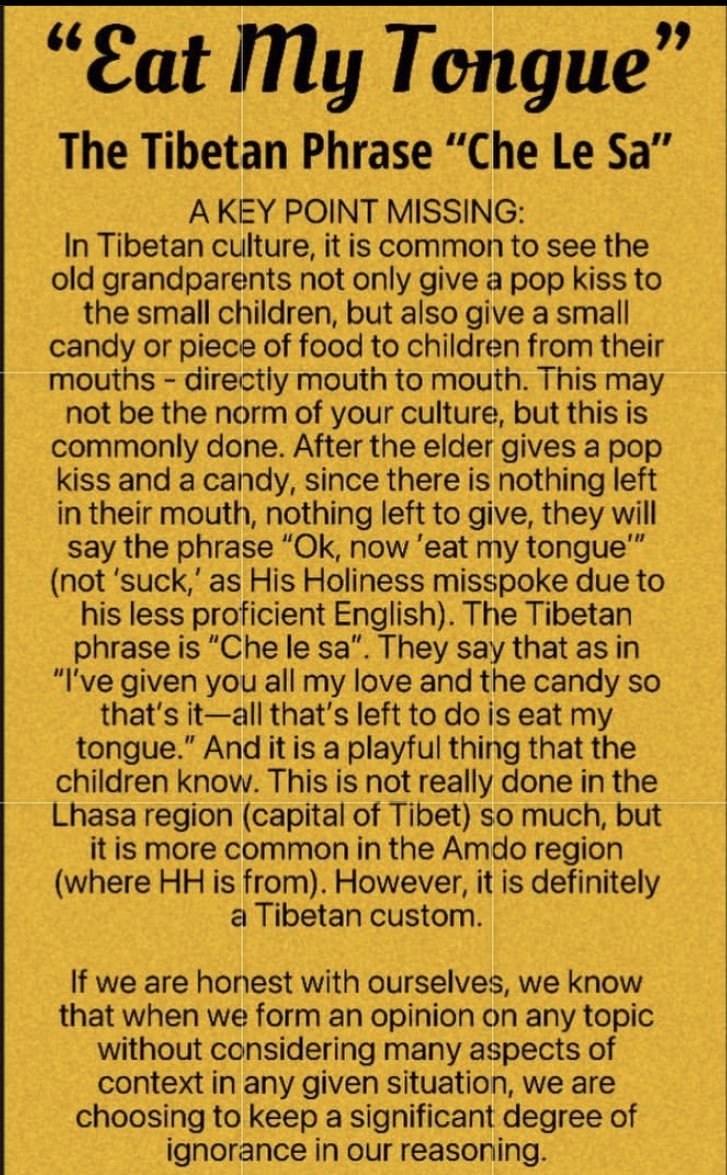
When the video came out, I couldn't watch it. "Suck my tongue" doesn't have good optics for people outside Tibet, but it turns out there is a cultural background that makes it part of playful dialogue for the elderly with children:

There's an excellent article in Tricycle by Joshua Brallier Shelton, a PhD student at Northwestern in Buddhist studies and masculinity. His studies include "uncovering the ways that male power becomes entangled in practitioners’ sincere religious aspirations, cultivating environments in which men eroticize and abuse that power in perverse and nauseating ways." He speaks Tibetan and is a practitioner himself.

He talks about his own discomfort, but also the importance of hearing Tibetan voices. The family were joyous at meeting the Dalai Lama and the video comes out 2 months later. Whether or not it was brought out by forces sympathetic to China, who are deeply against the Dalai Lama, that would be interesting to find out. 

There is a problem with sexual misconduct, and power structures, but Shelton concludes this incident isn't one of them, after elegantly laying out the various aspects of this incident. I'm going to take his word for it, and the words of Tibetans.

You can feel the need of people that this is innocent, and you can feel the tension of people who want to take the Dalai Lama down a peg, expose him, depower him. I've always seen him as a global spokesman but also on the leader of one of five main sects of Buddhism from Tibet. For people who regard him as the manifestation of Avalokita, he's a projection of their own power onto him, and he reflects their power back to them. He has devoted his entire life for working for Buddhism, Tibet, with lots of support to be sure, but also many years of intense practice. I know people who resent his popularity and influence, insist he's not all that. China, a collection of individuals, whose government invaded Tibet in 1959, and wouldn't be unhappy if the Dalai Lama took a hit on this one. Autocratic countries like China use information to undermine many things in open societies, like democracy and spiritual traditions, knowing that there will be some blowback such that the Dalai Lama issues an apology, when most Tibetans don't think he even needs to apologize. There's a freaky frame to this whole situation, and unpacking that is interesting. Hearing Tibetan voices is interesting. My heart goes out to them. There are several Tibetans who live in my neighborhood, and I'm going to have to ask them about this, it's an excuse to strike up another conversation.


Links in Shelton article:

Tibetan women say ‘no’ to violence as part of 16-day activism against gender disparity (Phayul).

Buddhist scholars receive grant to document sexual abuse in American Buddhism (Lion's Roar).

Tiben voice of Tenzin Pema (Facebook).

After 60 years in India, why are Tibetans leaving? (Al Jazeera)

Dr. Lobsang Sangay (Facebook) Video of someone who worked with the Dalai Lama for 10 years.

Friday, April 14, 2023

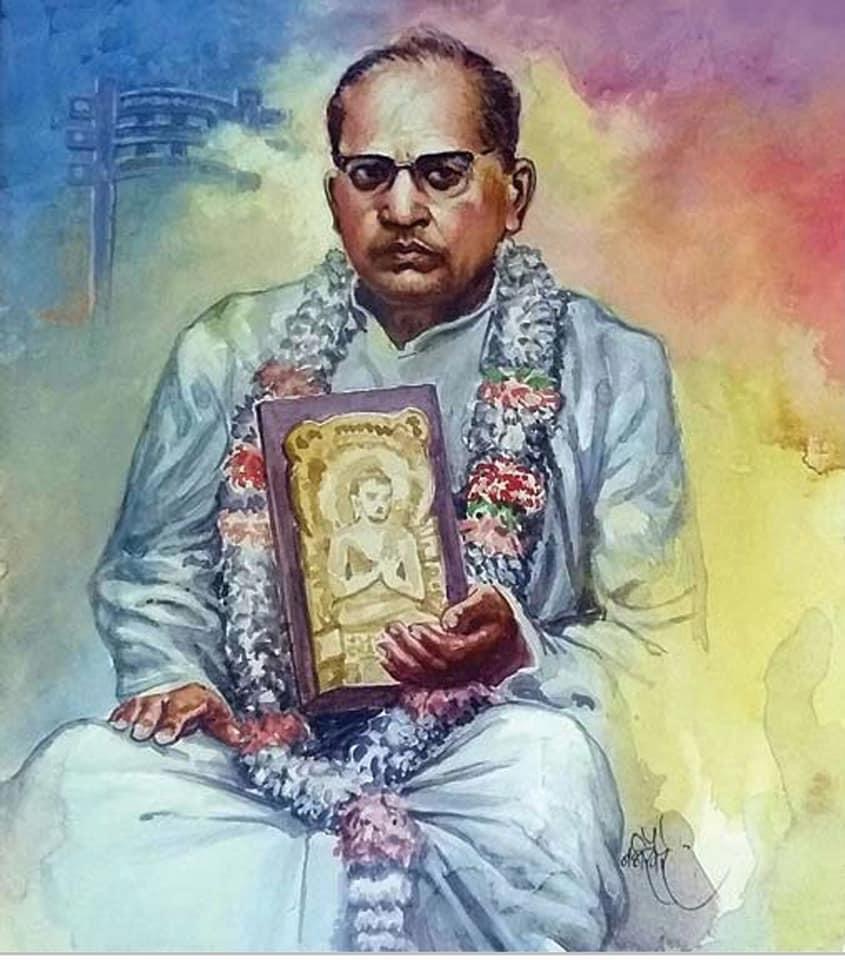
Ambedkar!

It's easy to remember because my son was born on the same day! Jai Bhim!


Link: to He Dared To Fight, about Babasaheb Ambedkar, 36 players.

How Dr BR Ambedkar's Words Helped Me Overcome My Fears (book excerpt from Yogesh Maitreya's memoir Water in a Broken Pot)

Tuesday, April 11, 2023

Bodhidharma

"I only talk about seeing your nature. I don’t talk about creating karma. Regardless of what we do, our karma has no hold on us. Through endless kalpas without beginning, it’s only because people don’t see their nature that they end up in hell. As long as a person creates karma, he keeps passing through birth and death. But once a person realizes his original nature, he stops creating karma." (Bodhidharma in The Zen Teaching of Bodhidharma)


Another monk, this one from Vietnam:


Wednesday, April 05, 2023

Bodhidharma

“When Bodhidharma arrived in China, in the latter part of the fifth century, there were approximately 2,000 Buddhist temples and 36,000 clergy in the South. In the North, a census in 477 counted 6,500 temples and nearly 80,000 clergy. Less than fifty years later, another census conducted in the North raised these figures to 30,000 temples and 2,000,000 clergy, or about 5 percent of the population.” (Introduced and translated by Red Pine: The Zen Teachings of Bodhidharma.)


You can listen to a computer read the book.


“If this is all we know about Bodhidharma, why, then, is he the most famous of all the millions of monks who have studied and taught the Dharma in China? The reason is that he alone is credited with bringing zen to China. Of course, zen, as meditation, had been taught and practiced for several hundred years before Bodhidharma arrived. And much of what he had to say concerning doctrine had been said before—by Tao-sheng, for example, a hundred years earlier. But Bodhidharma’s approach to zen was unique. As he says in these sermons, “Seeing your nature is zen … . Not thinking about anything is zen … . Everything you do is zen.” While others viewed zen as purification of the mind or as a stage on the way to buddhahood, Bodhidharma equated zen with buddhahood—and buddhahood with the mind, the everyday mind. Instead of telling his disciples to purify their minds, he pointed them to rock walls, to the movements of tigers and cranes, to a hollow reed floating across the Yangtze, to a single sandal. Bodhidharma’s zen was Mahayana Zen, not Hinayana Zen—the sword of wisdom, not the meditation cushion. As did other masters, he undoubtedly instructed his disciples in Buddhist discipline, meditation, and doctrine, but he used the sword that Prajnatara had given him to cut their minds free from rules, trances, and scriptures. Such a sword, though, is hard to grasp and hard to use. Small wonder that his sole successor, Hui-k’o, was a one-armed man.“ (op cit)


Bodhidharma: “…when you first embark on the Path, your awareness won’t be focused. You’re likely to see all sorts of strange, dreamlike scenes. But you shouldn’t doubt that all such scenes come from your own mind and nowhere else.”


Recent listening:

It's 30 years since Meeting The Buddhas came out. I listened to the interview of Vessantara on Windhorse. I appreciated that book when I read it long ago, pretty near when it came out, and I'm glad to see it's all back in one book now. It was split up into 3 books for a while.

Fascinating interview of Nagabodhi about his book about Sangharakshita. 

Bhikkhu Bodhi from Chuang Yen Monastery.

Ajahn Chah on Right Samadi. Developing Samadi

Hillside Hermitage seems pretty intense.


Friday, March 17, 2023

New York

“How do we take a city that is the center of the power of America and turn it into a city, when you enter it, everyone sees faith and sees God?” the mayor said during Thursday’s confab, held at Columbia University’s Teachers College. “Our challenge is not economics. Our challenge is not finance. Our challenge is faith. People have lost their faith.” (Daily News)


This is Christian, and Abrahamic religion exceptionalism. Not every religion believes in God. 

How do you celebrate diversity and then try to impose one type of religion and conveniently forget the freedom of religion? How do you forget America isn’t a theocracy? If you want to be a religious leader, maybe switch professions.

Adams is a democrat in name only, he switched parties to be mayor. He blathers to gather attention in a culture war like a Republican, while ignoring policy and good governance. He’s not bringing the city together. 

If he wants to be an ethical leader, how about tightening up his own administration, and stop appointing family members, that violate ethics. His playbook is Trump, false piety, lying, nepotism, always trying to break the rules, without a vision beyond trashing government and enriching himself and friends.